
Patient Education
What’s the Success Rate of Second-Time Rhinoplasty?
Considering a second nose job? Learn about the success rate of revision rhinoplasty, why it’s more complex than primary surgery, and how expert techniques like rib cartilage reconstruction improve outcomes. Discover what sets Kowon Plastic Surgery in Seoul apart.
Article
Published by Kowon Plastic Surgery, Gangnam, Seoul

A Surgical Perspective on Revision Nose Jobs — When the First Surgery Isn’t the Final Answer
“I’ve Already Had a Nose Job… So Why Don’t I Feel Done?”
For many patients, the decision to undergo rhinoplasty feels like a turning point. You did the research, committed to the recovery, and walked into the operating room with high hopes. But sometimes, despite all the effort — something still feels off. Breathing is labored. The shape isn’t what you envisioned. Or worse, complications from implants or scar tissue have left your nose more fragile than before.
This is where second-time rhinoplasty, also known as revision rhinoplasty, enters the conversation — not as a fallback, but as a refined, more experienced solution. At Kowon Plastic Surgery in Seoul, we see this often. And when patients ask, “What’s the success rate of revision rhinoplasty?”, the answer is more nuanced than a simple percentage. Let’s explore why.
Why Is Revision Rhinoplasty More Complex?
If primary rhinoplasty is like building a house, revision rhinoplasty is like renovating one with a damaged foundation. Scar tissue, weakened cartilage, altered anatomy — all of these raise the stakes. And if implants were used previously, they can migrate, get infected, or cause long-term distortion.
What many don’t realize is that each nose surgery leaves behind a surgical fingerprint — meaning less natural structure and more unpredictability for the next surgeon to navigate.
At Kowon, Dr. Kim Hyung Taek often compares revision cases to “untying a knot in the dark.” You must move carefully, tactfully, and with full understanding of the unseen tension points beneath the skin.
So, What Is the Success Rate of Second-Time Rhinoplasty?
Let’s break it down in honest, practical terms:
✅ With an Expert Surgeon in a Specialized Clinic:
Success rates range between 80–90%.
Especially when using rib cartilage reconstruction, natural tissue healing improves.
Function and appearance can both be restored — or significantly improved — in a single revision.
⚠️ Without Proper Expertise:
Success rates drop to 50–70%, or lower.
Repeated surgeries without structural support increase long-term risks (collapse, infection, breathing issues).
Poor planning often leads to a third or even fourth revision.
Important distinction: In rhinoplasty, success doesn’t always mean “perfect.” It means a safe, stable, and satisfying outcome — both functionally and aesthetically. Especially in revision cases, subtle improvements can be transformative.
What Factors Affect Revision Rhinoplasty Success?

Let’s go deeper into why one revision surgery can succeed where others fail.
1. The Condition of the Nasal Structure
A nose that’s had silicone or Gore-Tex implants may be thinner, more inflamed, or even partially resorbed. Scar tissue can obscure the original anatomy. At Kowon, our first step is structural analysis using 3D imaging and detailed consultation — not just to understand what went wrong, but what still remains.
2. Surgical Materials Used
We specialize in implant-free rib cartilage rhinoplasty — using the patient’s own tissue to rebuild support from the inside out. Rib cartilage offers durability and flexibility that synthetic implants simply can’t match in revision cases.
Dr. Kim often reshapes the rib cartilage in precise layers, almost like hand-carving a bridge inside the nose, which allows for both strong support and a natural curve.
3. Patient Healing Patterns
Some patients form excessive scar tissue (fibrosis), while others may have cartilage that warps over time. Understanding a patient's healing history helps predict outcomes — something that can’t be guessed by a general plastic surgeon, but must be interpreted by a rhinoplasty-focused specialist.
4. Surgical Philosophy
Many revision failures happen because of rushed or high-volume surgical models. At Kowon, our philosophy is “limited volume, maximum precision.” We deliberately perform fewer surgeries per day to ensure full attention to each case — especially important in complex revisions.
Case Example: A Breathing Problem, Not Just a Beauty Concern
A recent patient came to us after two prior rhinoplasties using silicone implants. Her bridge looked unnaturally high, but worse — she couldn’t breathe properly on her left side. During surgery, we found collapsed internal valves and a thinning nasal lining. Instead of replacing the implant with another one, Dr. Kim used rib cartilage grafting to rebuild the nasal framework. The implant was removed, and the airway was opened.
Three months later, the patient told us:
“I didn’t realize how much energy I was losing from not breathing well. Now I sleep better and feel more like myself again.”
This is the kind of “success” numbers alone can’t describe — the return of function, comfort, and confidence.
How Many Revision Surgeries Can One Nose Tolerate?
Technically, there’s no hard limit. But each revision becomes riskier, especially if synthetic implants were used repeatedly or the skin envelope is too thin. That’s why we recommend getting revision right the second time — not the third or fourth.
Choosing a clinic that focuses on rhinoplasty only — and not general plastic surgery — makes a dramatic difference in long-term outcomes.
What Can You Do to Improve Your Chances?
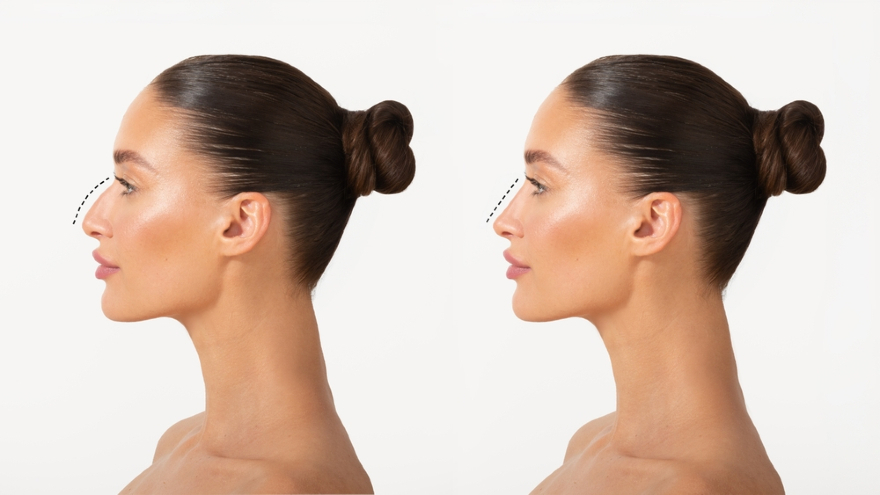
If you're considering a second nose job, here’s how to set yourself up for success:
Get a Real Evaluation — Not a Quick Quote
Revision rhinoplasty isn’t a menu item. At Kowon, we spend significant time on diagnostics before even proposing a plan. Look for a clinic that values surgical planning over quick promises.
Review Before/After Cases That Match Yours
Many clinics only show ideal transformations. Look for cases similar to yours — previous implant removals, collapsed tips, asymmetry, or scarring.
Prioritize Form and Function
You don’t have to sacrifice breathing for beauty. In fact, a well-functioning nose is more stable and attractive long-term. A good surgeon will explain both aspects.
Avoid “Stacking” Materials
If your first surgery involved an implant, adding more foreign materials won’t fix the core issue. A cartilage-based, tissue-friendly approach is usually safer — especially over time.
Final Takeaway: Choose Experience Over Expediency
Revision rhinoplasty can absolutely be successful — even life-changing — when approached with care, customization, and anatomical expertise. At Kowon Plastic Surgery, we don’t believe in shortcuts or one-size-fits-all noses. Every revision is a chance to restore both function and beauty — and, often, a patient’s confidence in themselves.
If you’ve had nose surgery before and still aren’t breathing right — or simply don’t feel “done” — trust your instincts. Revision may be the right step.
But don’t rush into the next solution. Consult a clinic that specializes in complex, implant-free, and function-preserving rhinoplasty. That’s what we do at Kowon.
Interested in a revision consultation?
We welcome patients from Korea and abroad. Let us help you understand what’s possible — safely, honestly, and artistically.
Medical Information
Read this article as general guidance.
- This article is provided for general education. It does not replace an in-person examination by a qualified surgeon.
- Results vary between patients. Rhinoplasty can involve bleeding, infection, scarring, asymmetry, breathing changes, graft or implant problems and the possibility of revision surgery.
- Computer simulations and before-and-after photographs cannot guarantee an individual outcome.
- Any prices or timelines mentioned are general. Request an individualised, itemised written quotation and a procedure-specific recovery schedule before paying a deposit or booking travel.
Published by
Kowon Plastic Surgery
A rhinoplasty-focused clinic in Gangnam, Seoul, led by Dr. Kim Hyeongtaek and registered with Medical Korea to treat international patients.
Consultation
Questions about this topic? Ask Dr. Kim directly.
2F, 110 Dosan-daero, Gangnam-gu, Seoul 06038. Send clear photographs, your main concerns and any previous surgery history, and Dr. Kim Hyeongtaek will review what can be assessed before you travel.
International Patient Desk — Gangnam
Kowon Plastic Surgery
Director Dr. Kim Hyeongtaek
Single-surgeon rhinoplasty and autologous cartilage center in Seoul. Delivering meticulous, individual surgical architecture for primary and complex revision procedures.
Practice & Inquiries
Gangnam Clinic
2F, 110 Dosan-daero, Gangnam District, Seoul 06038, South Korea
Consultation Hours (KST)
Mon – Fri: 10:00 – 19:00
Sat: 10:00 – 16:00 · Sun & Holidays Closed
Direct Communication Channels
Telephone: +822-6242-7080WhatsApp: +1-206-809-1367LINE Official: @967xxmreWeChat Consultation Service© 2025 Kowon Plastic Surgery. All rights reserved.
Registered Medical Institution for Foreign Patient Facilitation (Medical Korea). Surgical consultation and procedure terms subject to Korean Ministry of Health and Welfare guidelines.