
Patient Education
What Causes Nose Surgery Results to Fade Over Time?
Discover why nose surgery results can fade over time — from cartilage memory to implant issues — and how expert techniques like implant-free, rib cartilage rhinoplasty at Kowon Plastic Surgery ensure lasting, natural outcomes.
Article
Published by Kowon Plastic Surgery, Gangnam, Seoul

Understanding the Hidden Forces Behind “Disappearing” Rhinoplasty Outcomes — And How to Prevent Them
When patients come to Kowon Plastic Surgery for a revision consultation, a common phrase we hear is:
“My nose looked great right after surgery... but now it feels like everything’s changed.”
It’s a frustrating experience — one that often leaves patients questioning their surgeon, their healing process, and even their own body. But here’s the truth: fading results after rhinoplasty aren’t just a matter of bad luck or poor technique. They’re usually the result of predictable (and preventable) factors that weren’t fully addressed during the first surgery.
In this article, we’ll unpack what really causes rhinoplasty results to diminish over time — from cartilage memory to implant rejection — and how a precision-first approach, like the one we use at Kowon, can protect your results for the long haul.
The Illusion of Early Perfection: Why the First 6 Months Can Be Misleading
In the first weeks and months after nose surgery, swelling plays a strange trick on both patients and surgeons. The nose may look slim, lifted, and beautifully contoured — but that’s not always the final reality.
Swelling masks weaknesses. It can temporarily hide structural instability or camouflages small defects that gradually emerge. Once the tissue begins to settle, often between 6–18 months post-op, that “perfect nose” may start to look:
Droopier than expected
Asymmetrical
Thick-skinned or undefined at the tip
Unbalanced with the rest of the face
Many patients blame themselves. But the real issue often lies in underlying factors that weren’t fully anticipated during the initial surgery.
The 5 Core Reasons Nose Surgery Results Fade Over Time
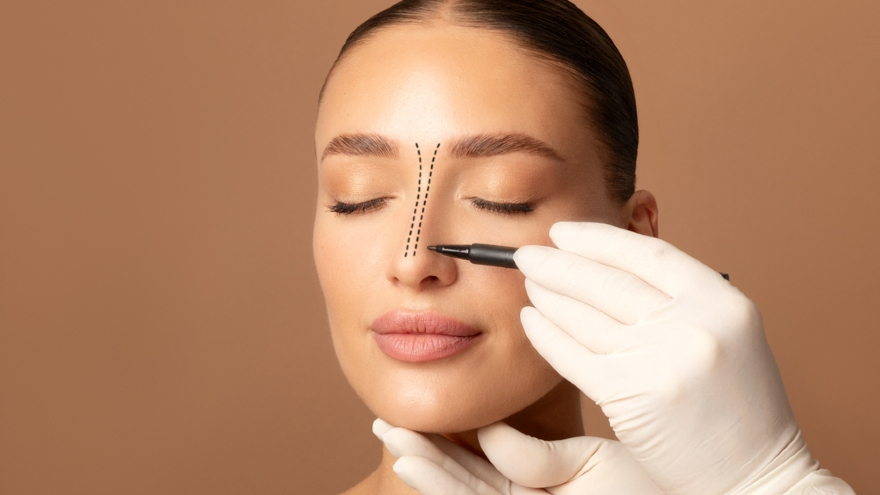
1. Cartilage Memory: The Nose Wants to Return to Its Original Shape
Cartilage is a living, flexible tissue. And like a coiled spring, it “remembers” where it used to be. If the cartilage isn’t precisely reshaped or adequately supported during surgery, it may gradually warp back toward its original position.
This is especially common in:
Tip cartilage (alar cartilages) that were only trimmed but not stabilized
Deviated septums that weren’t fully corrected
Revision cases where previous trauma has made the cartilage more unpredictable
Dr. Kim’s insight: At Kowon, we often reinforce reshaped cartilage with finely sculpted rib cartilage grafts. These act like architectural beams — giving the nose long-term support and helping “retrain” the cartilage to hold its new position.
2. Implant Shifting or Resorption: Silicone Doesn’t Always Stay Put
In Korea and other parts of Asia, silicone implants have long been used to create dorsal height — especially for patients with lower nasal bridges. But over time, implants can shift, thin the skin, or even become visible or infected.
Even when placed perfectly, implants rely heavily on how the patient’s body reacts. Over the years, the surrounding tissue may soften or erode, leading to:
Visible implant outlines
Nasal bridge irregularities
Tip projection loss
Redness or chronic inflammation
Why implant-free is safer: At Kowon, Dr. Kim favors autologous rib cartilage for dorsal augmentation. Not only is it biocompatible and stable, it also integrates naturally with the nasal structure — reducing long-term risks.
3. Insufficient Structural Support: Aesthetic Changes Without a Strong Foundation
Think of the nose like a tent. You can’t change the shape of the fabric without strengthening the poles underneath.
In many aesthetic rhinoplasty procedures — especially those done quickly or at high-volume clinics — the surgeon may focus on cosmetic goals (like a slimmer tip or higher bridge) without reinforcing the internal framework. As the swelling subsides, the weakened structures collapse inward, leading to:
A pinched nasal tip
Nasal valve collapse (affecting breathing)
Saddle nose deformity
This is particularly common in revision surgeries where too much cartilage was removed in the past.
Our philosophy: At Kowon, every case is approached with a “function-first” mindset. We rebuild and reinforce critical support zones — like the septum, spreader area, and tip complex — to ensure both form and function stand the test of time.
4. Skin Thickness and Tissue Behavior: The Role of Your Natural Anatomy
Not every nose is created equal — and skin type plays a huge role in how results age.
Thick, oily skin can obscure tip definition and may cause swelling to linger longer.
Thin, delicate skin may reveal every underlying irregularity, especially if the grafts or sutures aren’t smooth and stable.
Over time, the soft tissue envelope (the skin and fat covering the nose) can respond to gravity, scarring, and inflammation in unpredictable ways. Without careful planning, even well-executed surgery can lead to:
A bulbous or undefined tip
Scar tissue buildup
Long-term asymmetry
Customized planning matters: Dr. Kim tailors his approach not just to bone and cartilage, but also to skin behavior. We often use subtle fat grafting or dermal management techniques to balance thick vs. thin areas — especially in revision cases.
5. Post-Operative Healing Complications or Neglect
Even the best surgery can be undone by poor healing or aftercare. Factors like:
Infection
External trauma (even mild bumping)
Not following taping or splinting instructions
Smoking or poor nutrition
…can interfere with tissue remodeling and cause scarring, shifting, or graft failure.
At Kowon, we walk with patients long after surgery day. Our follow-up care is thorough, and we educate every patient on how to protect their results — especially during that vulnerable 6–12 month healing window.
Why Long-Term Success Requires a Different Surgical Mindset
Most rhinoplasty surgeries are evaluated at the 3- to 6-month mark — a point when swelling has gone down, and the shape looks “final.” But truly long-lasting results require:
Forward-thinking grafting techniques
A deep understanding of cartilage dynamics
Respect for each patient's unique tissue behavior
That’s why at Kowon Plastic Surgery, we don’t just operate — we engineer. Every surgery is planned with the 1-year, 5-year, and even 10-year result in mind.
Real-World Example: A Case of Disappearing Tip Definition
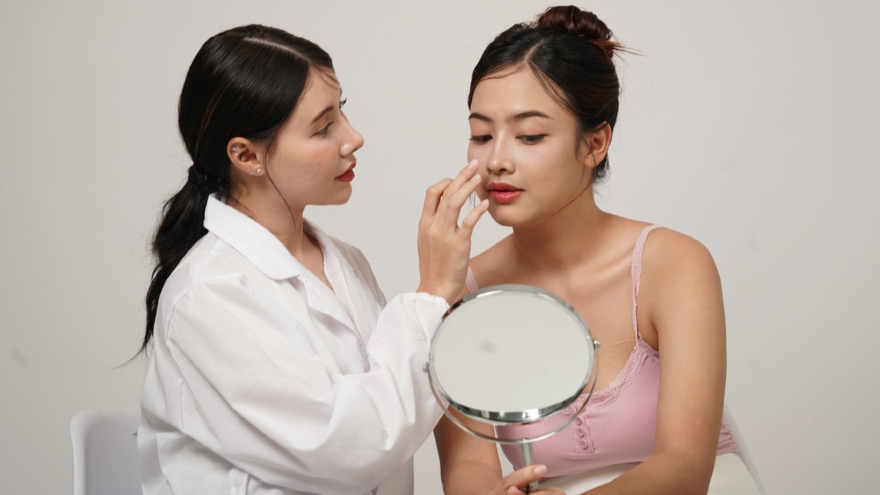
A patient visited us after having a silicone-based rhinoplasty two years prior. Initially, her tip looked sharp and refined. But over time, it began to droop and lose projection. She also developed visible implant borders at the nasal bridge.
What went wrong?
Her silicone implant was slightly too long, putting pressure on the tip skin.
No structural support was added to the tip — only trimming of the lower lateral cartilages.
Scar tissue developed around the implant, altering the shape.
Our revision approach:
Removed the implant entirely
Used the patient’s own rib cartilage to rebuild the bridge and tip
Added support grafts to prevent future drooping
A year later, the nose is stable, natural-looking, and — most importantly — functionally healthy.
Final Thoughts: Fading Results Aren’t Inevitable
If your rhinoplasty results seem to be fading, it’s not just in your head — and you’re not alone.
Many patients find themselves back at square one not because they made a poor choice, but because their surgery didn’t anticipate the long game.
At Kowon Plastic Surgery, we believe great rhinoplasty is never rushed. It’s deeply planned, structurally sound, and tailored for decades of balance, not just months of beauty.
Considering Revision or Implant-Free Rhinoplasty?
If you’ve had prior surgery and feel like your nose has changed — in shape, function, or both — it may be time to explore a second opinion.
🔎 Tip: Look for a clinic that specializes in structural support, rib cartilage grafting, and implant-free techniques — like Kowon Plastic Surgery in Seoul. Dr. Kim Hyung Taek brings 19+ years of focused experience in long-term rhinoplasty success.
Your next step?
Schedule a personalized consultation with a surgeon who can evaluate your current anatomy, past surgical impact, and future goals — with both safety and stability in mind.
Because your nose isn’t just about how it looks today.
It’s about how it lasts — for years to come.
Medical Information
Read this article as general guidance.
- This article is provided for general education. It does not replace an in-person examination by a qualified surgeon.
- Results vary between patients. Rhinoplasty can involve bleeding, infection, scarring, asymmetry, breathing changes, graft or implant problems and the possibility of revision surgery.
- Computer simulations and before-and-after photographs cannot guarantee an individual outcome.
- Any prices or timelines mentioned are general. Request an individualised, itemised written quotation and a procedure-specific recovery schedule before paying a deposit or booking travel.
Published by
Kowon Plastic Surgery
A rhinoplasty-focused clinic in Gangnam, Seoul, led by Dr. Kim Hyeongtaek and registered with Medical Korea to treat international patients.
Consultation
Questions about this topic? Ask Dr. Kim directly.
2F, 110 Dosan-daero, Gangnam-gu, Seoul 06038. Send clear photographs, your main concerns and any previous surgery history, and Dr. Kim Hyeongtaek will review what can be assessed before you travel.
International Patient Desk — Gangnam
Kowon Plastic Surgery
Director Dr. Kim Hyeongtaek
Single-surgeon rhinoplasty and autologous cartilage center in Seoul. Delivering meticulous, individual surgical architecture for primary and complex revision procedures.
Practice & Inquiries
Gangnam Clinic
2F, 110 Dosan-daero, Gangnam District, Seoul 06038, South Korea
Consultation Hours (KST)
Mon – Fri: 10:00 – 19:00
Sat: 10:00 – 16:00 · Sun & Holidays Closed
Direct Communication Channels
Telephone: +822-6242-7080WhatsApp: +1-206-809-1367LINE Official: @967xxmreWeChat Consultation Service© 2025 Kowon Plastic Surgery. All rights reserved.
Registered Medical Institution for Foreign Patient Facilitation (Medical Korea). Surgical consultation and procedure terms subject to Korean Ministry of Health and Welfare guidelines.