
Patient Education
Silicone vs. Rib Cartilage in Nose Jobs: Safety & Risks
Compare synthetic vs. autologous nose implants. Learn about safety, rejection risks, and long-term results from Kowon Plastic Surgery experts.
Article
Published by Kowon Plastic Surgery, Gangnam, Seoul
Understanding the Use of Synthetic Implants in Rhinoplasty
-808d3e5d-ca88-4298-9ee1-19446e1fb471.jpg)
Rhinoplasty has advanced remarkably, and one of the more debated innovations involves the use of synthetic materials for nasal reshaping. Silicone and Gore-Tex (expanded polytetrafluoroethylene or ePTFE) remain the most frequently used materials, valued for their consistency, availability, and ease of use in augmentation procedures.
These synthetic options allow for controlled shaping and can be inserted without the need for harvesting tissue from the patient's own body. For individuals seeking a refined nasal profile, especially those desiring a higher bridge or more defined tip, synthetic implants may seem like a straightforward solution.
However, these benefits must be weighed against the risks—including potential immune reactions, infection, implant shifting, and long-term maintenance issues. This article explores the safety profile of synthetic implants, compares them with autologous (natural) grafts, and shares insights from Dr. Kim Hyung Taek of Kowon Plastic Surgery, a global leader in advanced rhinoplasty.
What Are Synthetic Implants in Nose Surgery?
Synthetic nasal implants are man-made devices surgically placed to reshape or augment the nose. The two most common materials are:
Silicone: A firm yet flexible material that maintains its shape and is relatively easy to sculpt.
Gore-Tex (ePTFE): A softer material with a porous surface that allows partial tissue in-growth, helping the implant stay in position.
These implants are primarily used in augmentation rhinoplasty to enhance the nasal bridge or define the tip. This approach is particularly favored in East Asian countries, where patients often seek a more projected nasal profile.
Unlike autologous cartilage—harvested from the rib, ear, or septum—synthetic implants reduce surgical time and eliminate donor site complications. But they also introduce the risk of being recognized by the body as a foreign object, leading to complications over time.
Global Trends and Rising Concerns
The use of synthetic implants is widespread, with adoption seen across Asia, North America, and Latin America. Surgeons appreciate the predictability of outcomes and shorter operative time. Patients are often attracted by the promise of immediate aesthetic improvements with minimal invasiveness.
However, increased global access has also led to a rise in revision procedures. Dr. Kim reports a noticeable uptick in patients seeking correction of issues related to earlier synthetic augmentations. These include implant shifting, capsular contracture, and extrusion—complications that can develop years after the initial surgery.
As a result, many experts now advocate for a more conservative approach, especially for patients with thin skin or a history of nasal surgery. The trend is shifting toward the use of natural cartilage, particularly in complex or revision cases.
The Safety of Silicone Implants
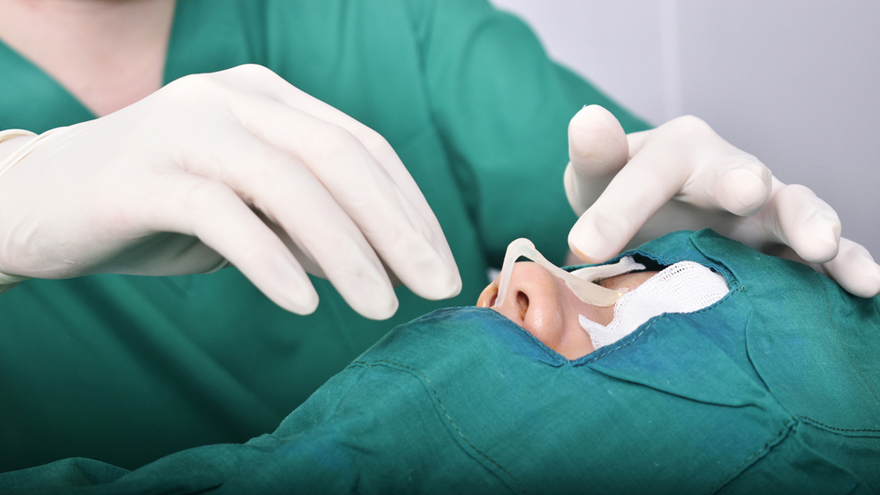
Silicone implants have been utilized in facial plastic surgery for over 50 years. Their inert nature and structural reliability make them popular for initial augmentation.
Advantages:
Consistent shape and feel
Relatively low cost
Easy to sculpt and insert
Risks:
Capsular Contracture: Scar tissue may harden around the implant, leading to distortion.
Extrusion: In some cases, the implant pushes through the skin due to poor placement or pressure.
Infection: Occurs in 2–10% of cases, especially in patients with thin or sensitive skin.
Long-term studies have also shown that silicone can become visible or palpable over time, particularly as the surrounding soft tissue changes with age. Dr. Kim advises caution for patients with less soft tissue coverage and typically recommends rib cartilage in such scenarios.
Evaluating Gore-Tex Implants
Gore-Tex offers a more pliable alternative to silicone and tends to be preferred in cases where a more natural feel is desired. Its porous structure permits slight tissue integration, which can reduce implant mobility.
Benefits:
Softer, more natural texture
Lower extrusion rates compared to silicone
Better implant stability due to tissue adhesion
Limitations:
Difficult to remove during revision surgeries
Tissue integration can make repositioning complex
Risks of visibility and contour irregularities, especially in thin-skinned patients
A 2022 study published in the Journal of Plastic and Reconstructive Surgery concluded that Gore-Tex has a marginally higher revision rate due to minor infections and aesthetic irregularities. While still considered safe in many cases, careful patient selection and experienced surgical technique are essential.
Immune Response and Rejection Concerns
One of the main concerns with synthetic implants is the possibility of a foreign body response. This occurs when the immune system identifies the implant as a threat and mounts a reaction.
Symptoms of Foreign Body Reactions:
Persistent redness or swelling
Pain or discomfort
Gradual distortion of nasal contour
Implant rejection or extrusion
Although rare, these immune responses can have serious consequences. Chronic inflammation can result in subtle deformities, skin thinning, or long-term discomfort.
At Kowon, a comprehensive screening process helps identify patients at risk for these complications. When needed, autologous cartilage is recommended as a biocompatible alternative.
Infection Risks with Synthetic Rhinoplasty
Infections are a significant concern with any implantable material. Synthetic implants do not receive blood supply, making it difficult for the body to clear infections once they begin. Factors influencing infection risk include:
Surgeon experience
Post-operative hygiene
Implant position and depth
Patient’s immune status
Patients with diabetes, smokers, or those with autoimmune conditions face heightened risks. Even minor infections can compromise results, leading to extrusion or deformity.
Kowon Plastic Surgery maintains a highly sterile operating environment and limits the number of procedures performed each day. Their protocol includes antibiotic prophylaxis, digital wound monitoring, and personalized post-op care to prevent infection.
Do Synthetic Implants Last Long-Term?
Theoretically, synthetic materials like silicone and Gore-Tex are permanent. However, their long-term success depends on both surgical technique and how the patient’s tissues change over time.
Common long-term issues include:
Implant visibility due to thinning skin
Drooping of nasal tip due to aging
Scar tissue affecting implant positioning
Patients often return for minor revisions to address these changes. In some cases, implants must be removed and replaced with natural cartilage to restore harmony and safety.
Kowon offers long-term follow-up care, ensuring that changes are detected early and managed conservatively. This commitment to post-surgical support significantly reduces complication rates.
Synthetic vs. Autologous: What’s the Best Option?
Criteria | Synthetic Implants | Autologous Cartilage |
|---|---|---|
Invasiveness | Less invasive | Requires tissue harvesting |
Surgical Time | Typically shorter | Slightly longer |
Infection/Rejection Risk | Higher | Lower |
Natural Integration | Limited | Excellent |
Suitability for Thin Skin | Risk of visibility or warping | Ideal |
Revision Flexibility | More difficult | Easier to reshape or adjust |
Autologous cartilage, particularly from the rib, is considered the gold standard in complex or high-risk cases. It integrates naturally with the nasal structure and provides strong support. Dr. Kim’s approach to rib cartilage rhinoplasty has earned him international recognition, and he regularly trains surgeons on this advanced technique.
Revision Surgery: Why It’s Often Necessary
Rhinoplasty using synthetic materials may require revision months or even years later. Complications leading to revision include:
Implant shifting
Capsular contracture
Infection or extrusion
Patient dissatisfaction with shape or projection
Revision surgeries are inherently more complex. If tissue has been damaged or thinned, it limits the available options for correction. In many such cases, removing the synthetic material and reconstructing the nose with autologous cartilage is the safest and most effective solution.
Dr. Kim and his team at Kowon are highly specialized in handling these sensitive revisions. Their careful planning, detailed consultations, and access to advanced surgical tools enable successful outcomes even in difficult scenarios.
Patient Story: A Safer Outcome
A 28-year-old patient from the Philippines visited Kowon Plastic Surgery after noticing discoloration and implant shifting five years post-surgery at another clinic. Her nasal bridge had become asymmetric, and she was experiencing increasing discomfort.
Following a comprehensive examination, Dr. Kim recommended replacing the synthetic implant with rib cartilage. The surgery restored structural stability and resolved her aesthetic concerns. Six months later, the patient reported not only improved appearance but also a renewed sense of confidence and well-being.
Her story reflects a broader shift toward biocompatible solutions and personalized care in modern rhinoplasty.
Why Leading Surgeons Prefer Autologous Cartilage
Increasingly, surgeons around the world are embracing autologous cartilage for its safety and durability. Key advantages include:
No risk of immune rejection
Natural look and feel
Adaptability in complex reshaping
Autologous cartilage also allows surgeons to make subtle refinements, essential in achieving harmonious facial aesthetics. This flexibility makes it the material of choice for secondary and tertiary rhinoplasty procedures.
Kowon’s reputation is built on the successful application of rib cartilage techniques across thousands of cases, many of which involve complex reconstructions.
Is Kowon Plastic Surgery Right for You?
Located in the heart of Gangnam, Seoul, Kowon Plastic Surgery offers more than just technical expertise. Patients benefit from:
One-on-one consultations with 3D simulation
Limited daily surgeries for quality-focused care
Multilingual staff to support international clients
Proven results in both primary and revision surgeries
Whether you're considering your first rhinoplasty or need help with a previous procedure, Kowon’s approach combines precision, compassion, and innovation.
Common Questions About Synthetic Nose Implants
Do synthetic implants shift over time? Yes, especially in patients with thin skin or if fixation is inadequate. Proper technique and patient selection are key.
Can I have an allergic reaction to silicone? True allergies are rare. However, chronic immune reactions can occur, leading to discomfort or implant failure.
Do synthetic implants break down? The materials themselves are durable, but surrounding tissues can change, leading to aesthetic challenges.
Is a natural result possible with synthetic implants? Yes, in select cases. But cartilage typically offers better integration and longevity.
Final Thoughts: Navigating the Safety of Synthetic Materials in Nose Jobs
Synthetic implants remain a viable option for nasal enhancement, especially in primary surgeries. But they are not without risks. Over time, factors such as infection, immune response, and anatomical changes may compromise the results.
By contrast, autologous cartilage offers a safer, more natural alternative. Clinics like Kowon Plastic Surgery demonstrate how personalized care, advanced surgical methods, and biocompatible materials can lead to long-lasting success. When considering rhinoplasty, patients should consult with experts who prioritize both aesthetics and health—ensuring peace of mind and beautiful results for years to come.
Medical Information
Read this article as general guidance.
- This article is provided for general education. It does not replace an in-person examination by a qualified surgeon.
- Results vary between patients. Rhinoplasty can involve bleeding, infection, scarring, asymmetry, breathing changes, graft or implant problems and the possibility of revision surgery.
- Computer simulations and before-and-after photographs cannot guarantee an individual outcome.
- Any prices or timelines mentioned are general. Request an individualised, itemised written quotation and a procedure-specific recovery schedule before paying a deposit or booking travel.
Published by
Kowon Plastic Surgery
A rhinoplasty-focused clinic in Gangnam, Seoul, led by Dr. Kim Hyeongtaek and registered with Medical Korea to treat international patients.
Consultation
Questions about this topic? Ask Dr. Kim directly.
2F, 110 Dosan-daero, Gangnam-gu, Seoul 06038. Send clear photographs, your main concerns and any previous surgery history, and Dr. Kim Hyeongtaek will review what can be assessed before you travel.
International Patient Desk — Gangnam
Kowon Plastic Surgery
Director Dr. Kim Hyeongtaek
Single-surgeon rhinoplasty and autologous cartilage center in Seoul. Delivering meticulous, individual surgical architecture for primary and complex revision procedures.
Practice & Inquiries
Gangnam Clinic
2F, 110 Dosan-daero, Gangnam District, Seoul 06038, South Korea
Consultation Hours (KST)
Mon – Fri: 10:00 – 19:00
Sat: 10:00 – 16:00 · Sun & Holidays Closed
Direct Communication Channels
Telephone: +822-6242-7080WhatsApp: +1-206-809-1367LINE Official: @967xxmreWeChat Consultation Service© 2025 Kowon Plastic Surgery. All rights reserved.
Registered Medical Institution for Foreign Patient Facilitation (Medical Korea). Surgical consultation and procedure terms subject to Korean Ministry of Health and Welfare guidelines.