
Patient Education
Silicone Nose Implants: Long-Term Rhinoplasty Guide
Discover how silicone implants reshape your nose safely and permanently. Expert insights, patient stories, and what to expect long-term.
Article
Published by Kowon Plastic Surgery, Gangnam, Seoul
Understanding the Role of Silicone in Modern Nose Surgery
For individuals considering nasal reshaping, silicone implants offer a durable, aesthetically pleasing option—particularly for patients looking for consistent, long-lasting outcomes. Widely used in Asian rhinoplasty, these implants help enhance nasal structure without the need for donor cartilage. When performed by an experienced surgeon, the procedure is safe, highly customizable, and capable of delivering transformative yet natural-looking results.
"What makes silicone so effective is its stability and adaptability. We’ve seen excellent outcomes even 10+ years post-op," says Dr. Kim Hyung Taek, rhinoplasty specialist at Kowon Plastic Surgery.
Historically, silicone implants have been the preferred choice in East Asia due to their ability to augment low nasal bridges with precision and minimal invasiveness. In recent years, global demand for silicone-based rhinoplasty has grown, as patients from diverse backgrounds seek refined, harmonious facial profiles without the drawbacks of traditional graft harvesting.
What Are Silicone Implants—and Why Are They Used in Rhinoplasty?
-58c3fd24-10f2-477d-ad5f-92190d593ed9.jpg)
Medical-grade silicone is a biocompatible material designed to harmonize with human tissue. In nasal surgeries, silicone implants are sculpted to fit individual facial anatomy and are often used to:
Elevate the nasal bridge
Refine tip projection
Enhance symmetry and facial proportion
These implants come in various shapes (L-shaped, I-shaped) and can be custom-modified during surgery for optimal alignment with the patient’s goals. For patients with flat or undefined nasal features, particularly in ethnic rhinoplasty, silicone provides structural height and contour that other methods may not achieve as predictably.
Unlike injectable fillers or rib cartilage grafts, silicone implants can be inserted with precision, allowing surgeons to tailor the outcome based on digital simulations or 3D imaging. Moreover, the procedure avoids harvesting cartilage from the ribs or ears, which may be necessary in other approaches—thereby reducing overall surgical trauma and recovery time.
The Procedure: From Consultation to Recovery
1 Initial Consultation
Patients undergo a detailed consultation that includes aesthetic planning, health screening, and digital morphing. "We use advanced 3D simulations to preview outcomes and guide implant design," explains Dr. Kim.
During this session, the surgeon assesses nasal anatomy, skin thickness, previous surgeries, and patient expectations. Blood tests, allergy checks, and imaging help ensure that each case is approached with both precision and safety. Surgeons also review the pros and cons of implant materials, empowering patients with transparent, medically sound information.
2. Surgical Process
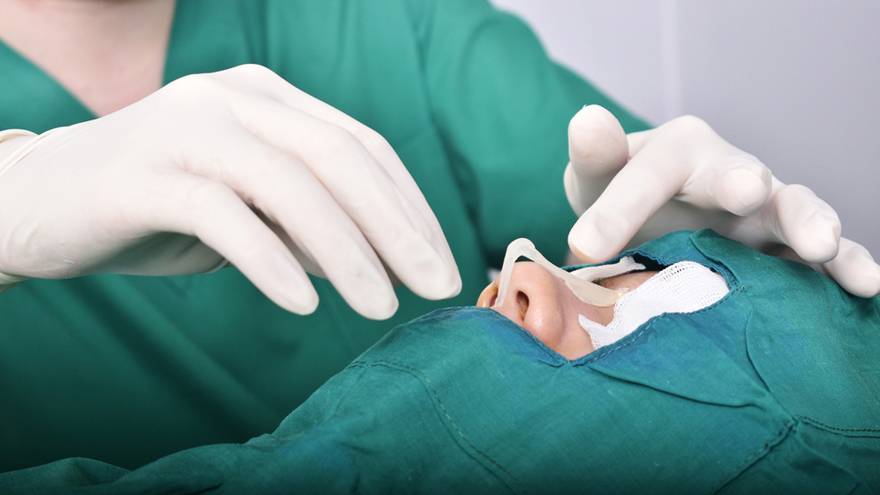
The procedure typically involves internal incisions hidden inside the nostrils. A pre-sculpted implant is carefully placed over the nasal bridge or tip and adjusted to achieve balanced, natural-looking results. The surgery usually takes about 1 to 2 hours to complete.
At Kowon Plastic Surgery, real-time imaging is used during surgery to confirm correct placement and alignment. Incision closure is done with dissolvable sutures, and medical-grade dressings ensure the surgical site remains sterile and protected.
3. Post-Op Healing
Most patients resume daily activities within 7–10 days. Minor swelling and bruising are expected but subside quickly. Final results stabilize over 3–6 months.
Patients are typically advised to sleep with their head elevated, avoid wearing glasses directly on the nose for several weeks, and follow a personalized aftercare plan. Additional follow-ups may include non-invasive imaging to track implant stability.
Patient Review: "I flew from Canada to Seoul for my surgery at Kowon. The staff guided me every step of the way, and my nose looks exactly how I imagined."
Long-Term Benefits of Silicone Implants
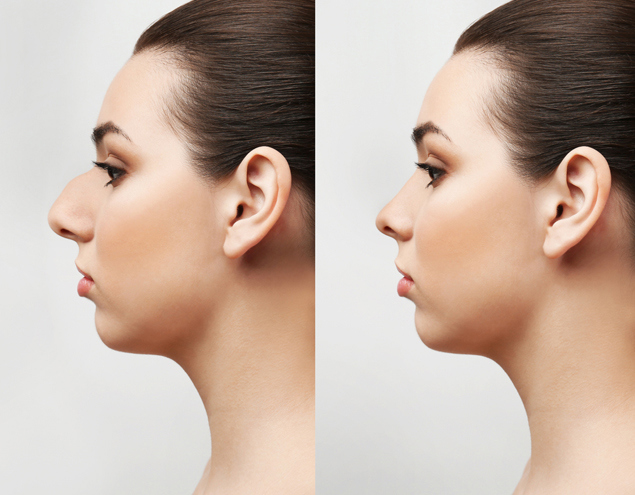
Durability: Implants maintain shape without degradation.
Natural Aesthetic: Designed to blend with facial features.
Minimally Invasive: Less trauma compared to cartilage harvesting.
Adjustable: Can be revised or removed if preferences or needs change.
Beyond their aesthetic function, silicone implants also serve patients recovering from trauma, revision surgeries, or congenital nasal asymmetries. Their predictability and ability to hold structure make them an invaluable tool for surgeons dealing with complex cases.
Are Silicone Implants Safe?
Yes, when placed by a board-certified plastic surgeon with rhinoplasty experience. Risks such as infection, implant shifting, or scar tissue formation are rare but should be discussed during consultation.
Kowon Plastic Surgery’s infection rate in rhinoplasty procedures remains under 0.2%—well below global averages. All surgeries are performed in KAHF-certified operating rooms, with real-time monitoring and English-speaking patient coordinators.
The most important factor in silicone rhinoplasty safety is surgeon technique. A poorly placed implant or underdissected pocket can lead to complications. That’s why Kowon emphasizes individualized planning and precise intraoperative assessment.
Clinical Note: Studies published in the Aesthetic Surgery Journal confirm that silicone implants, when placed correctly, have complication rates comparable to autologous cartilage procedures.
How Silicone Compares to Other Options
Option | Pros | Cons |
|---|---|---|
Silicone | Long-lasting, customizable, non-invasive | Slight risk of shifting if improperly placed |
Rib Cartilage | Natural material, good for complex cases | Requires harvesting, higher risk of warping |
Gore-Tex | Soft texture, integrated with tissue | Higher risk of infection and revision surgery |
Fillers | Non-surgical, immediate result | Temporary, not suitable for major reshaping |
Silicone stands out for its structural consistency and aesthetic flexibility. While some patients prefer the idea of using their own tissue (autologous grafts), silicone offers a controlled, reproducible outcome that can be achieved without the donor site morbidity.
The Kowon Difference: Why Patients Choose Dr. Kim
With over 10,000 successful rhinoplasty procedures, Dr. Kim Hyung Taek is a trusted figure in Asian rhinoplasty. Known for pioneering blended techniques using both autologous cartilage and silicone, his approach reduces complications and ensures long-term stability.
Dr. Kim has published on implant stability, revision rhinoplasty, and aesthetic trends in ethnic nose surgery. His holistic approach ensures that each patient's nose complements their entire facial structure.
Real Case Outcomes: Before-and-after portfolios are available for prospective patients.
Global Client Base: Patients from the U.S., U.K., Australia, and UAE cite Kowon’s concierge-style care as a key benefit.
Technology-Driven: From digital morphing to 3D scanning, the clinic uses cutting-edge tools to optimize surgical planning.
"Dr. Kim’s artistic sense is unmatched. He doesn’t just reshape noses—he balances the whole face," says a patient from Singapore.
Frequently Asked Questions
Q: How long do silicone implants last?
A: Decades, often without need for replacement unless aesthetics or health needs change.
Q: Can silicone implants be removed?
A: Yes, they are reversible and adjustable.
Q: Will I have visible scars?
A: In most cases, no. Incisions are internal or hidden on the columella.
Q: Is it painful?
A: Discomfort is minimal and well-managed with medication. Most patients describe it as pressure, not pain.
Q: How soon can I travel after surgery?
A: Most international patients stay 10–14 days in Seoul. After initial recovery checks, travel is usually safe.
Final Takeaway: A Lasting Change with Trusted Expertise
Silicone implants offer a permanent, predictable, and safe method for nasal enhancement. With the right surgeon and a personalized plan, the results can be both life-changing and confidence-boosting. Patients are encouraged to consult clinics like Kowon Plastic Surgery, where medical precision meets artistic vision.
Whether you're pursuing a refined nasal contour, correcting a past surgical outcome, or undergoing a cultural enhancement, silicone rhinoplasty provides reliable results grounded in decades of surgical advancement. At Kowon, your journey begins with trust—and ends with transformation.
Medical Information
Read this article as general guidance.
- This article is provided for general education. It does not replace an in-person examination by a qualified surgeon.
- Results vary between patients. Rhinoplasty can involve bleeding, infection, scarring, asymmetry, breathing changes, graft or implant problems and the possibility of revision surgery.
- Computer simulations and before-and-after photographs cannot guarantee an individual outcome.
- Any prices or timelines mentioned are general. Request an individualised, itemised written quotation and a procedure-specific recovery schedule before paying a deposit or booking travel.
Published by
Kowon Plastic Surgery
A rhinoplasty-focused clinic in Gangnam, Seoul, led by Dr. Kim Hyeongtaek and registered with Medical Korea to treat international patients.
Consultation
Questions about this topic? Ask Dr. Kim directly.
2F, 110 Dosan-daero, Gangnam-gu, Seoul 06038. Send clear photographs, your main concerns and any previous surgery history, and Dr. Kim Hyeongtaek will review what can be assessed before you travel.
International Patient Desk — Gangnam
Kowon Plastic Surgery
Director Dr. Kim Hyeongtaek
Single-surgeon rhinoplasty and autologous cartilage center in Seoul. Delivering meticulous, individual surgical architecture for primary and complex revision procedures.
Practice & Inquiries
Gangnam Clinic
2F, 110 Dosan-daero, Gangnam District, Seoul 06038, South Korea
Consultation Hours (KST)
Mon – Fri: 10:00 – 19:00
Sat: 10:00 – 16:00 · Sun & Holidays Closed
Direct Communication Channels
Telephone: +822-6242-7080WhatsApp: +1-206-809-1367LINE Official: @967xxmreWeChat Consultation Service© 2025 Kowon Plastic Surgery. All rights reserved.
Registered Medical Institution for Foreign Patient Facilitation (Medical Korea). Surgical consultation and procedure terms subject to Korean Ministry of Health and Welfare guidelines.