Patient Education
Open vs. Closed Rhinoplasty: Which One Should You Choose?
Discover the pros and cons of open vs. closed rhinoplasty to find the best option for your nose job. Learn the differences and make an informed choice today!
Article
Published by Kowon Plastic Surgery, Gangnam, Seoul
-e155e74d-9a61-488d-ade6-a2106fe779f3.jpg)
If you’re considering rhinoplasty — whether it’s your first surgery or a much-needed revision — one of the first questions you’ll face is this:
Should I get open or closed rhinoplasty?
It’s a common fork in the road, but not always one that’s clearly explained. Many patients walk into consultations with vague impressions like “closed is less invasive” or “open leaves scars,” but these ideas only scratch the surface.
At Kowon Plastic Surgery, we’ve performed over 10,000 rhinoplasties — including some of the most challenging revisions in Asia. We don’t just look at your nose; we listen to your story. And when it comes to choosing open vs. closed rhinoplasty, the best choice depends not just on anatomy, but also on your goals, surgical history, and even lifestyle.
So let’s walk through it — in plain, honest terms — from the perspective of a surgeon who’s seen both methods transform (and sometimes fail) in real-life cases.
The Basics: What’s the Difference Between Open and Closed Rhinoplasty?
Before anything else, let’s define what sets these two techniques apart — not in theory, but in how they feel and function during real surgery.
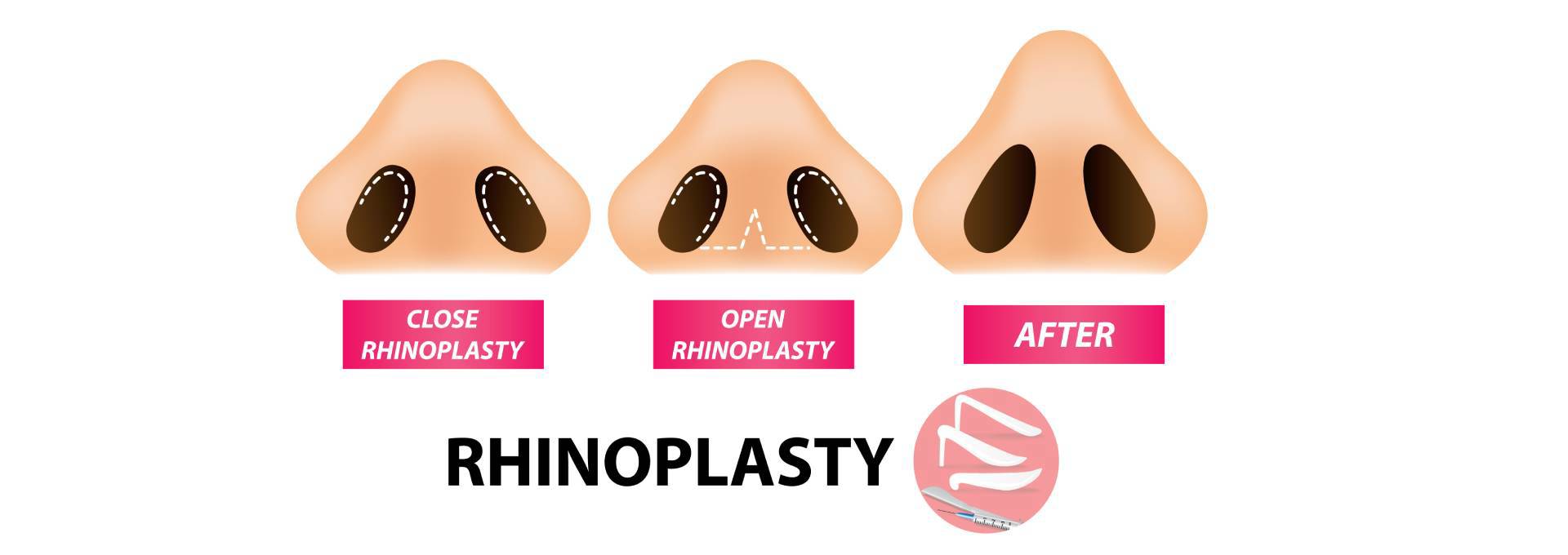
Closed Rhinoplasty (Endonasal Technique)
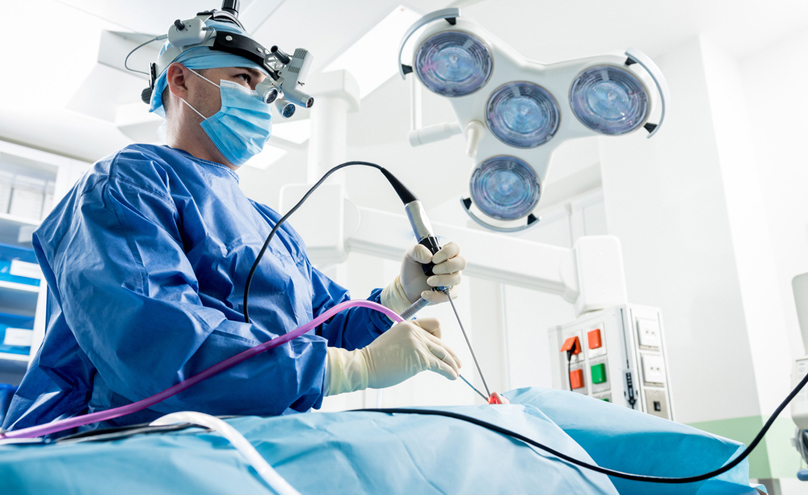
This approach keeps all incisions inside the nostrils. No external scar. The skin is lifted slightly from underneath, and surgical access is more limited.
Pros:
No visible scarring
Less swelling and faster recovery
Good for minor to moderate tip reshaping or dorsal refinement
Limits:
Less visibility for the surgeon
More difficult for complex or asymmetric corrections
Not ideal for revision cases or major structural work
Open Rhinoplasty (External Approach)
-0f53e955-5689-4031-a08c-713c0b15211d.jpg)
Here, the surgeon makes a tiny incision at the base of the columella (the strip of skin between your nostrils), allowing the nasal skin to be lifted like a flap for full access.
Pros:
Full view of cartilage and bone structures
Greater precision for reshaping the tip, septum, and internal support
Essential for revision, rib cartilage, or functional reconstruction
Limits:
Slightly longer recovery
Miniscule scar (usually invisible after a few months)
Requires meticulous technique to avoid long-term swelling or stiffness
At Kowon, we often say:
“Closed rhinoplasty is like repairing a violin through the soundhole. Open rhinoplasty lets you tune the entire instrument.”
The key is choosing the method that lets us shape not just the surface — but the sound and structure of your nose.
Form vs. Function: Why the Choice Isn’t Just Cosmetic
Most patients come in thinking about the outside of the nose — the hump, the tip, the angle in profile. But what’s under the skin is just as important, especially when it comes to breathing, stability, and long-term aging.
If your nasal structure is already compromised — from trauma, past surgery, or even congenital asymmetry — a closed approach may not give the surgeon enough access to rebuild it properly.
At Kowon, we’ve treated countless patients who had closed rhinoplasty elsewhere and later experienced:
Ongoing nasal collapse or tip drooping
Difficulty breathing through one or both nostrils
Visible asymmetry that couldn’t be corrected internally
In many of these cases, revision through an open technique — often using rib cartilage — was the only reliable way to restore both beauty and function.
This is why, for complex or high-precision cases, open rhinoplasty is not a compromise. It’s the gold standard.
“Will I Have a Scar?” — Let’s Clear This Up
Yes, open rhinoplasty involves an external incision. But in skilled hands, this doesn’t mean a visible or problematic scar.
Here at Kowon, Dr. Kim uses a refined trans-columellar incision that heals seamlessly in over 95% of patients. After six months, most can’t even find it without a mirror — and even fewer others will ever notice.
More important than the scar is what happens beneath it.
If an open approach allows us to build you a stronger, more natural, and more breathable nose, it’s a worthy trade-off — especially when the scar itself is practically invisible.
Open Rhinoplasty Isn’t Always Necessary — But It’s Often Wiser
Let’s be honest: Closed rhinoplasty has its place.
In patients with relatively balanced nasal anatomy — no previous surgery, no trauma, and only light reshaping needed — the closed approach offers:
Shorter surgical time
Quicker return to work or social life
Lower postoperative swelling
We often use closed rhinoplasty for:
Minor hump removal
Subtle bridge refinement
Gentle tip rotation in well-supported noses
But for patients seeking:
Ethnic refinement without implants
Revision after failed silicone or Gore-Tex implants
Breathing correction from deviated septum or internal collapse
Tip reconstruction using rib cartilage
...an open approach is almost always more predictable, more precise, and safer long-term.
Dr. Kim’s Take: Why Visibility = Safety in Advanced Rhinoplasty
Dr. Kim Hyung Taek, founder of Kowon Plastic Surgery and head of the Rib Cartilage Rhinoplasty Center at O&Young, has a clear philosophy:
“If I cannot see the problem clearly, I cannot solve it completely. That’s why I prefer open rhinoplasty for high-difficulty cases — because the patient deserves a long-term solution, not a temporary illusion.”
This is especially true for implant-free rhinoplasty, where rib cartilage must be sculpted and positioned with millimeter accuracy. Without full visual access, that kind of structural work is nearly impossible to do safely or symmetrically.
Real Talk: How to Know Which Approach Is Right for You
Here are a few honest pointers:
If this is your first surgery, and your concerns are minimal (e.g., a small hump, narrow nostrils), you may be a candidate for closed rhinoplasty.
If you’ve had previous rhinoplasty and still have problems — aesthetically or functionally — an open revision gives your surgeon a much better chance to repair and restore.
If you’re seeking implant-free or rib cartilage-based reshaping, open rhinoplasty is not just recommended — it’s essential.
If you have thick skin, twisted septum, or nasal trauma, open access allows for more complete correction with fewer surprises.
The best way to find out? Schedule a consultation with a surgeon who can perform both techniques — and who’s honest about which one suits your case best.
At Kowon, we don’t push one method over the other. We simply recommend the safest, most effective path — one that aligns with your goals and protects your future.
Final Takeaway: Choose a Method That Honors Your Long-Term Outcome
Don’t let the decision between open and closed rhinoplasty become a marketing gimmick. It’s not about what’s trending or what’s “less invasive” on paper.
It’s about which technique gives your surgeon the tools to build something stable, beautiful, and lasting.
When in doubt: clarity matters more than concealment.
If you're unsure whether your previous nose job needs correction, or you're planning your first with high expectations, consult a clinic that specializes in high-safety, high-precision rhinoplasty — like Kowon.
We’re here not just to sculpt your nose, but to protect your breathing, confidence, and future comfort — with full visibility and zero shortcuts.
Medical Information
Read this article as general guidance.
- This article is provided for general education. It does not replace an in-person examination by a qualified surgeon.
- Results vary between patients. Rhinoplasty can involve bleeding, infection, scarring, asymmetry, breathing changes, graft or implant problems and the possibility of revision surgery.
- Computer simulations and before-and-after photographs cannot guarantee an individual outcome.
- Any prices or timelines mentioned are general. Request an individualised, itemised written quotation and a procedure-specific recovery schedule before paying a deposit or booking travel.
Published by
Kowon Plastic Surgery
A rhinoplasty-focused clinic in Gangnam, Seoul, led by Dr. Kim Hyeongtaek and registered with Medical Korea to treat international patients.
Consultation
Questions about this topic? Ask Dr. Kim directly.
2F, 110 Dosan-daero, Gangnam-gu, Seoul 06038. Send clear photographs, your main concerns and any previous surgery history, and Dr. Kim Hyeongtaek will review what can be assessed before you travel.
International Patient Desk — Gangnam
Kowon Plastic Surgery
Director Dr. Kim Hyeongtaek
Single-surgeon rhinoplasty and autologous cartilage center in Seoul. Delivering meticulous, individual surgical architecture for primary and complex revision procedures.
Practice & Inquiries
Gangnam Clinic
2F, 110 Dosan-daero, Gangnam District, Seoul 06038, South Korea
Consultation Hours (KST)
Mon – Fri: 10:00 – 19:00
Sat: 10:00 – 16:00 · Sun & Holidays Closed
Direct Communication Channels
Telephone: +822-6242-7080WhatsApp: +1-206-809-1367LINE Official: @967xxmreWeChat Consultation Service© 2025 Kowon Plastic Surgery. All rights reserved.
Registered Medical Institution for Foreign Patient Facilitation (Medical Korea). Surgical consultation and procedure terms subject to Korean Ministry of Health and Welfare guidelines.