Patient Education
Nose Fillers vs. Rhinoplasty: Which is Right for You?
Discover the differences between nose fillers and rhinoplasty, including costs, recovery, and suitability, to help you make the best choice for your nose reshaping needs.
Article
Published by Kowon Plastic Surgery, Gangnam, Seoul
Introduction:

As more people seek ways to enhance their facial features, reshaping the nose has become a popular choice. The nose, as a prominent facial feature, plays a key role in maintaining overall facial harmony. When considering nose enhancement, two primary options emerge: non-surgical nose fillers (or liquid rhinoplasty) and traditional rhinoplasty (surgical nose reshaping). While both options target improving the shape and contour of the nose, they vary significantly in procedure, results, recovery, and costs.
Determining which procedure is the best fit for you can be challenging. Factors such as anatomy, desired outcomes, and personal comfort with surgery all influence the decision. In this guide, we'll break down the differences between nose fillers and rhinoplasty, highlighting their benefits, risks, recovery times, and costs to help you make a well-informed choice.
At Kowon Plastic Surgery in Seoul, under the expert guidance of Dr. Kim Hyung Taek, patients benefit from personalized treatment plans designed to ensure both safety and natural results. With over 19 years of experience, Dr. Kim’s skill and expertise offer peace of mind for those seeking aesthetic or functional nose reshaping.
Understanding Nose Fillers
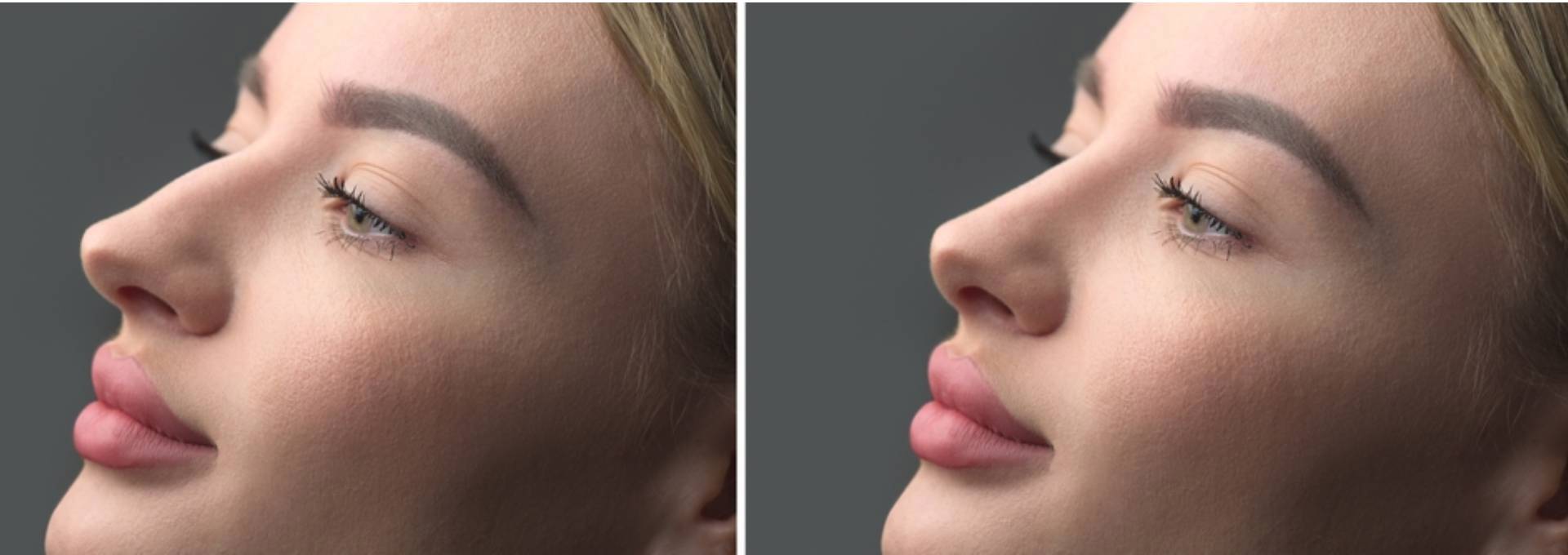
Nose fillers, a non-surgical approach to nose reshaping, involve injecting hyaluronic acid-based dermal fillers into the nose to temporarily alter its shape. This procedure is commonly referred to as liquid rhinoplasty.
What Nose Fillers Can Address:
Smooth out bumps or depressions along the nasal bridge
Lift a drooping nasal tip
Correct mild asymmetry
Enhance overall nasal contour
Key Advantages of Nose Fillers:
Quick and Convenient: Treatment takes only 15 to 30 minutes.
Minimal Recovery: Most patients can resume daily activities immediately with minor swelling or bruising that subsides quickly.
Temporary but Effective: Results are visible right after treatment, lasting between 6 months and 2 years, depending on the filler type and individual metabolism.
Although temporary, non-surgical nose fillers offer a low-risk, high-reward solution for patients looking to enhance their nose’s appearance without committing to surgery.
Understanding Rhinoplasty
-671e6b18-180f-4779-9b6b-1657255f7122.jpg)
Rhinoplasty, or a traditional "nose job," is a surgical procedure designed to permanently reshape and improve both the aesthetic and functional aspects of the nose. It is particularly beneficial for individuals seeking significant changes or those needing structural correction.
What Rhinoplasty Can Address:
Refining nasal size or shape
Straightening the nasal bridge
Improving nasal tip appearance (e.g., reducing bulbous or droopy tips)
Correcting functional issues like a deviated septum
Fixing deformities from trauma (revision rhinoplasty)
The Rhinoplasty Procedure:
Rhinoplasty can involve either closed (internal) or open (external) incisions, depending on the complexity of the surgery. Surgeons meticulously sculpt the bone and cartilage to achieve the desired outcome. In advanced cases, autologous rib cartilage (harvested from the patient’s own ribs) may be used to enhance nasal structure.
Benefits of Rhinoplasty:
Permanent Results: Once healed, the changes are lifelong.
Customization: Offers greater control for dramatic reshaping, improving facial harmony.
Functional Benefits: It can also correct breathing issues, making it an ideal choice for patients with functional concerns.
Procedure Duration and Recovery: Nose Fillers vs. Rhinoplasty
-84b2c939-2099-481f-9b42-e5c20bcfced5.jpg)
Nose Fillers:
The non-surgical nature of nose fillers makes the procedure quick and convenient. It typically takes about 15 to 30 minutes and involves minimal preparation. Mild side effects like swelling or bruising are temporary and subside within a few days. There’s no extended downtime, making it perfect for individuals with busy schedules.
Rhinoplasty is a more involved procedure that can take between 1 to 3 hours, depending on the complexity. It is performed under controlled medical conditions and typically includes a recovery period of 2 to 4 weeks before patients can resume normal activities. Full recovery, with final results, can take up to a year, as subtle swelling can persist for several months.
Kowon Plastic Surgery emphasizes patient safety and tailored post-operative care, ensuring optimal recovery and minimal risks.
Rhinoplasty:
Rhinoplasty is a more involved procedure that can take between 1 to 3 hours, depending on the complexity. It is performed under controlled medical conditions and typically includes a recovery period of 2 to 4 weeks before patients can resume normal activities. Full recovery, with final results, can take up to a year, as subtle swelling can persist for several months.
Kowon Plastic Surgery emphasizes patient safety and tailored post-operative care, ensuring optimal recovery and minimal risks.
Risks and Side Effects
Both procedures come with inherent risks, but these differ significantly in nature and severity.
Nose Fillers:
Although minimally invasive, nose fillers carry risks such as:
Mild swelling, redness, or bruising
Rare complications like vascular occlusion, which could block blood flow and damage tissue (though this is extremely rare and can be treated by dissolving the filler)
Rhinoplasty:
As a surgical procedure, rhinoplasty involves greater risk:
Scarring, especially with open rhinoplasty
Potential for revision surgeries if the results aren’t as expected
Kowon Plastic Surgery uses state-of-the-art techniques to minimize risks, including meticulous pre-surgical assessments and ongoing post-operative care for all patients.
Who Should Consider Each Procedure?
Best Candidates for Nose Fillers:
Individuals looking for temporary, subtle changes
Those who want to correct small imperfections without surgery
Patients with busy schedules or low tolerance for downtime
Best Candidates for Rhinoplasty:
Those seeking permanent, significant reshaping
Individuals with structural issues affecting breathing, such as a deviated septum
People desiring a comprehensive solution for both aesthetics and functionality
Kowon Plastic Surgery offers a personalized consultation for each patient to determine the most suitable option, ensuring safety and satisfaction.
Cost Comparison: Nose Fillers vs. Rhinoplasty
Nose Fillers:
Typically priced between $600 and $1,500 per session, nose fillers are a cost-effective solution for patients seeking minor improvements. However, since they are temporary, repeat sessions are required to maintain results.
Rhinoplasty:
Rhinoplasty is a more significant financial commitment, with costs ranging from $5,000 to $15,000 depending on location, complexity, and the surgeon’s experience. While it requires a higher initial investment, the results are permanent.
Kowon Plastic Surgery offers competitive pricing while maintaining the highest standards of care, ensuring value for patients seeking either non-surgical or surgical treatments.
Final Thoughts: Making the Right Choice
Choosing between nose fillers and rhinoplasty depends on various factors such as the extent of changes desired, budget, and willingness to undergo surgery. Nose fillers are ideal for temporary, non-invasive adjustments, while rhinoplasty is the solution for permanent, substantial reshaping.
Consulting with a board-certified surgeon like Dr. Kim Hyung Taek at Kowon Plastic Surgery is crucial. Dr. Kim’s experience and personalized care help guide patients through their decision-making process, ensuring they select the best option for their needs.
Medical Information
Read this article as general guidance.
- This article is provided for general education. It does not replace an in-person examination by a qualified surgeon.
- Results vary between patients. Rhinoplasty can involve bleeding, infection, scarring, asymmetry, breathing changes, graft or implant problems and the possibility of revision surgery.
- Computer simulations and before-and-after photographs cannot guarantee an individual outcome.
- Any prices or timelines mentioned are general. Request an individualised, itemised written quotation and a procedure-specific recovery schedule before paying a deposit or booking travel.
Published by
Kowon Plastic Surgery
A rhinoplasty-focused clinic in Gangnam, Seoul, led by Dr. Kim Hyeongtaek and registered with Medical Korea to treat international patients.
Consultation
Questions about this topic? Ask Dr. Kim directly.
2F, 110 Dosan-daero, Gangnam-gu, Seoul 06038. Send clear photographs, your main concerns and any previous surgery history, and Dr. Kim Hyeongtaek will review what can be assessed before you travel.
International Patient Desk — Gangnam
Kowon Plastic Surgery
Director Dr. Kim Hyeongtaek
Single-surgeon rhinoplasty and autologous cartilage center in Seoul. Delivering meticulous, individual surgical architecture for primary and complex revision procedures.
Practice & Inquiries
Gangnam Clinic
2F, 110 Dosan-daero, Gangnam District, Seoul 06038, South Korea
Consultation Hours (KST)
Mon – Fri: 10:00 – 19:00
Sat: 10:00 – 16:00 · Sun & Holidays Closed
Direct Communication Channels
Telephone: +822-6242-7080WhatsApp: +1-206-809-1367LINE Official: @967xxmreWeChat Consultation Service© 2025 Kowon Plastic Surgery. All rights reserved.
Registered Medical Institution for Foreign Patient Facilitation (Medical Korea). Surgical consultation and procedure terms subject to Korean Ministry of Health and Welfare guidelines.