
Patient Education
Natural Non-Implant Rhinoplasty by Dr. Kim
Discover how non-implant rhinoplasty with Dr. Kim offers natural results, lower risks, and personalized care using your own cartilage.
Article
Published by Kowon Plastic Surgery, Gangnam, Seoul
Introduction
Rhinoplasty has long been a cornerstone of facial cosmetic surgery, commonly used to refine nasal shape or address functional breathing concerns. While traditional methods often rely on synthetic implants, a growing number of patients are turning to non-implant rhinoplasty—also known as autologous rhinoplasty—for more natural, personalized results.
Dr. Kim Hyung Taek of Kowon Plastic Surgery in Seoul has earned international recognition for advancing this technique, which uses the patient’s own cartilage—typically from the rib—to reshape the nose. With nearly two decades of surgical experience and a commitment to natural outcomes, Dr. Kim offers insight into what makes non-implant rhinoplasty a compelling choice for many.
This guide explores every facet of the procedure—from how it works and who it's best for, to what recovery looks like and why Kowon is a destination of choice for international patients.
What Is Non-Implant Rhinoplasty?

Non-implant rhinoplasty involves reshaping the nose without using synthetic materials like silicone. Instead, cartilage from the patient’s own body—most commonly the rib—is harvested and sculpted to enhance the nasal profile. This technique is especially valuable for individuals seeking safer alternatives to implants and those who prioritize biologically compatible outcomes.
"Using a patient’s own cartilage gives us remarkable flexibility in shaping the nose while minimizing risk of rejection or long-term complications," explains Dr. Kim.
This method is suitable for addressing concerns such as mild dorsal humps, subtle asymmetry, or slightly crooked nasal bridges, all while maintaining the nose’s structural integrity. Autologous cartilage offers excellent long-term stability, which is why it’s increasingly favored by top-tier surgeons.
How the Procedure Works: Step-by-Step Overview

Initial Consultation
During this one-on-one session, Dr. Kim evaluates your nasal structure and facial balance. Digital imaging may be used to visualize potential results. This conversation sets clear expectations and outlines procedural specifics tailored to your goals. Medical history, previous surgeries, and current nasal function are all reviewed to ensure the patient is a suitable candidate.Cartilage Harvesting
Cartilage is gently extracted from a small incision below the breast area. This minor procedure is typically done using minimally invasive techniques to reduce scarring and discomfort. In some cases, septal or ear cartilage may be used if sufficient volume is available. The harvested tissue is then sterilized and shaped to suit the patient’s needs.Nasal Sculpting
Using precision techniques, Dr. Kim integrates the cartilage to improve nasal contour, refine symmetry, or support collapsed nasal structures. The graft is meticulously carved and layered to achieve natural contours and functional support. The approach varies based on whether the patient needs augmentation, refinement, or structural correction.Closure and Recovery
All incisions are sutured carefully. Patients typically report mild discomfort and minimal downtime, with most resuming normal activities within 10–14 days. Pain is usually managed with oral medications, and swelling subsides significantly within the first few weeks.
Follow-up appointments are scheduled to monitor healing and ensure the graft is integrating as intended.
Why Patients Choose Non-Implant Rhinoplasty
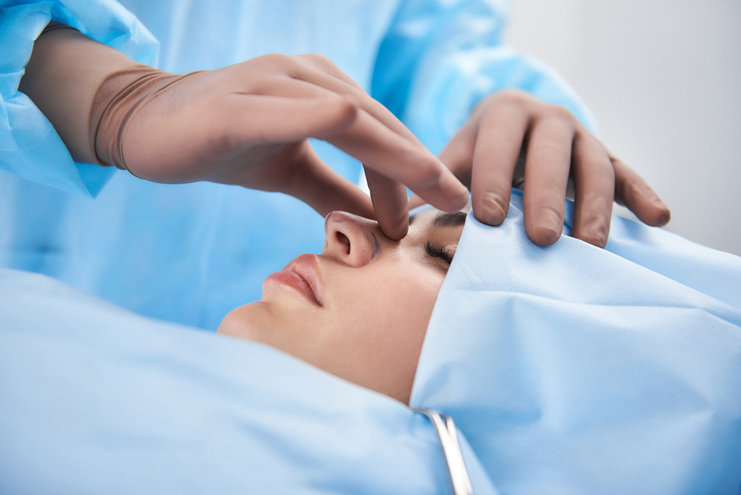
Natural, Harmonious Results
The use of autologous tissue allows the reshaped nose to blend organically with the rest of the face. This approach avoids the “overdone” look that some patients fear with synthetic implants.Lower Risk Profile
Avoiding synthetic materials reduces the chance of infection, extrusion, or long-term complications. There’s no risk of implant displacement, capsular contracture, or allergic reaction.Functional and Aesthetic Benefits
Many patients experience improved airflow and reduced nasal obstruction in addition to cosmetic enhancement. Functional improvements often include correcting a deviated septum or collapsed nasal valves.Long-Lasting Effects
Results are stable over time, with little to no need for revision when performed by an experienced surgeon. Autologous cartilage integrates well with surrounding tissue and maintains its shape for years.Cultural and Medical Preference
In regions like Korea, where natural beauty standards are emphasized, many patients opt for techniques that avoid foreign materials. Additionally, patients with histories of implant rejection or complications are ideal candidates.
Is This the Right Option for You?
Ideal candidates include:
Individuals with mild to moderate cosmetic concerns (e.g., bumps, dips, or crooked bridges)
Patients who prefer to avoid synthetic implants
Those in good general health, capable of undergoing rib cartilage harvesting
People seeking both cosmetic and functional nasal improvements
Patients undergoing revision rhinoplasty to correct implant-related issues
Contraindications may include uncontrolled health conditions, severe nasal trauma requiring more complex reconstruction, or unrealistic expectations. A detailed consultation is essential to determine candidacy.
How Non-Implant Rhinoplasty Compares to Traditional Techniques
Feature | Non-Implant Rhinoplasty | Implant-Based Rhinoplasty |
|---|---|---|
Material Used | Patient’s own cartilage | Silicone or other synthetics |
Risk of Rejection | Very low | Moderate to high |
Recovery Time | 10–14 days | 2–3 weeks or longer |
Result Longevity | Long-lasting, natural integration | May require replacement |
Aesthetic Outcome | Subtle, authentic contour | Can appear more sculpted |
Revision Risk | Low when done by experts | Moderate to high |
Risks and Recovery Insights
All surgical procedures carry some level of risk, and non-implant rhinoplasty is no exception. However, the use of autologous tissue minimizes many of the complications seen with implants.
Potential risks include:
Temporary swelling and bruising
Mild scarring at the harvest and incision sites
Rare graft resorption or asymmetry
Minor discomfort in the rib area
Dr. Kim and his team emphasize patient education and post-operative care to optimize healing. "We walk every patient through detailed recovery protocols to ensure smooth, predictable outcomes," he notes.
Tips for optimal recovery:
Avoid strenuous activity for at least two weeks
Sleep with your head elevated
Follow all wound care instructions
Attend all scheduled follow-up visits
Real Patient Journeys
One patient from Australia shared her story:
“I was nervous about having rib cartilage taken, but Dr. Kim explained everything. My nose looks completely natural and I can finally breathe comfortably.”
Another patient from the UAE shared:
“I chose Kowon because I didn’t want silicone. My nose looks amazing, and I had no issues with recovery.”
Before-and-after photos available on Kowon’s website demonstrate how subtle yet transformative these outcomes can be. Testimonials consistently highlight Dr. Kim’s meticulous approach and his team’s responsive care.
A Global Destination for Natural Rhinoplasty
Kowon Plastic Surgery offers full-service support for international patients, including:
Virtual consultations
Translation assistance
Airport pick-up and nearby lodging
Coordinated medical tourism support
With thousands of successful cases, Dr. Kim’s clinic is a trusted name in non-implant rhinoplasty. His expertise draws patients from the U.S., Europe, Australia, and across Asia. International visitors can rest assured knowing every detail—from arrival to recovery—is handled with care.
Final Thoughts: Trust Your Face to a Specialist
Non-implant rhinoplasty is more than just a cosmetic procedure—it’s a tailored solution for patients who value safety, subtlety, and structure. With Dr. Kim’s hands-on expertise, patients can expect results that not only look better but feel and function better too.
Kowon Plastic Surgery stands apart for its commitment to natural outcomes, advanced techniques, and patient-centered care. Whether you’re correcting a previous implant, addressing nasal function, or simply refining your look, Dr. Kim offers a path to results that are both beautiful and biologically sound.
To explore your options, schedule a virtual consultation with Kowon Plastic Surgery. Let their experience guide your transformation.
Medical Information
Read this article as general guidance.
- This article is provided for general education. It does not replace an in-person examination by a qualified surgeon.
- Results vary between patients. Rhinoplasty can involve bleeding, infection, scarring, asymmetry, breathing changes, graft or implant problems and the possibility of revision surgery.
- Computer simulations and before-and-after photographs cannot guarantee an individual outcome.
- Any prices or timelines mentioned are general. Request an individualised, itemised written quotation and a procedure-specific recovery schedule before paying a deposit or booking travel.
Published by
Kowon Plastic Surgery
A rhinoplasty-focused clinic in Gangnam, Seoul, led by Dr. Kim Hyeongtaek and registered with Medical Korea to treat international patients.
Consultation
Questions about this topic? Ask Dr. Kim directly.
2F, 110 Dosan-daero, Gangnam-gu, Seoul 06038. Send clear photographs, your main concerns and any previous surgery history, and Dr. Kim Hyeongtaek will review what can be assessed before you travel.
International Patient Desk — Gangnam
Kowon Plastic Surgery
Director Dr. Kim Hyeongtaek
Single-surgeon rhinoplasty and autologous cartilage center in Seoul. Delivering meticulous, individual surgical architecture for primary and complex revision procedures.
Practice & Inquiries
Gangnam Clinic
2F, 110 Dosan-daero, Gangnam District, Seoul 06038, South Korea
Consultation Hours (KST)
Mon – Fri: 10:00 – 19:00
Sat: 10:00 – 16:00 · Sun & Holidays Closed
Direct Communication Channels
Telephone: +822-6242-7080WhatsApp: +1-206-809-1367LINE Official: @967xxmreWeChat Consultation Service© 2025 Kowon Plastic Surgery. All rights reserved.
Registered Medical Institution for Foreign Patient Facilitation (Medical Korea). Surgical consultation and procedure terms subject to Korean Ministry of Health and Welfare guidelines.