Patient Education
How to Spot a Good (and Bad) Nose Job Outcome
Wondering how to tell if a nose job was done well? Learn how to spot the signs of a good vs. bad rhinoplasty outcome — from natural proportions to hidden complications. Insights from Korea’s revision rhinoplasty experts at Kowon Plastic Surgery.
Article
Published by Kowon Plastic Surgery, Gangnam, Seoul

A Surgeon’s Guide to Reading the Signs — Before It’s Too Late
“It Looks... Different, But Is It Better?”
This is a thought many patients have — whether they’re evaluating their own rhinoplasty results in the mirror or scrolling through before-and-after photos online. The truth is, spotting a good nose job outcome isn’t always about dramatic changes. In fact, the most successful rhinoplasties are often the most subtle — the ones you don’t even realize are surgical.
At Kowon Plastic Surgery in Gangnam, Seoul, we specialize in both primary and complex revision rhinoplasty, and we’ve seen it all: noses that look “perfect” but don’t breathe, and noses that look off even after multiple procedures. This article is your guide to spotting the difference between a refined, natural result — and one that could signal future problems.
What Makes a “Good” Nose Job?
(Hint: It’s More Than Just Looks)
A truly good rhinoplasty is the harmony of form and function. That means your nose should look right and work right.
Here’s how to spot a high-quality outcome — whether on yourself, in photos, or during a consultation:
✅ 1. Natural Proportions
A well-done nose doesn’t draw attention. It fits seamlessly into the rest of the face — aligning with the patient’s facial anatomy, ethnicity, and individual features. It’s not about chasing trends or celebrity noses. It’s about balance.
At Kowon, Dr. Kim Hyung Taek often says: “A good nose doesn’t stand out — it blends in. It should feel like it was always yours.”
✅ 2. Smooth Contours
Look for gentle transitions along the nasal bridge, tip, and nostrils. There shouldn’t be sharp angles, visible implant edges, or obvious indentations — especially when viewed in profile or under natural lighting.
✅ 3. Symmetry Without Rigidity
Perfect symmetry isn’t the goal. In fact, slight asymmetry is natural and often more aesthetically pleasing. But the overall structure should appear stable and centered — not twisted, collapsed, or uneven.
✅ 4. Preserved (or Improved) Breathing
The best rhinoplasty results don’t just preserve function — they often enhance it. If you find it harder to breathe post-surgery, that’s a red flag, not just a side effect.
Common Signs of a “Bad” Nose Job
(Many of Which Don’t Show Up Right Away)
Unfortunately, not all rhinoplasty outcomes age well. Some issues may take months — even years — to reveal themselves. Here’s what to look out for:
❌ 1. Over-Reduced or “Surgical” Appearance
Noses that are pinched, scooped, or turned up excessively often signal aggressive cartilage removal or implant overuse. This might create a “doll-like” or “done” look — which not only ages poorly but also compromises nasal structure.
❌ 2. Visible or Displaced Implants
If you can see the outline of an implant (especially under thin skin), or if the nose feels unnaturally hard or immobile, it may indicate implant complications — a common cause of revision surgery at our clinic.
What many don’t realize: implants like silicone or Gore-Tex can shift, thin the skin, or even become infected over time — especially in Korea’s humid climate.
❌ 3. Asymmetry or Collapse
A twisted bridge, drooping tip, or one nostril smaller than the other can all be signs of internal structural damage — often from poor technique or under-supported revisions.
❌ 4. Nasal Valve Obstruction
If you can’t breathe well, especially when exercising or sleeping, you may have internal valve collapse — where the airway becomes too narrow due to over-resection or scarring.
At Kowon, we prioritize functional preservation in every surgery — because breathing well is just as important as looking good.
What Does a Skilled Surgeon Look For?
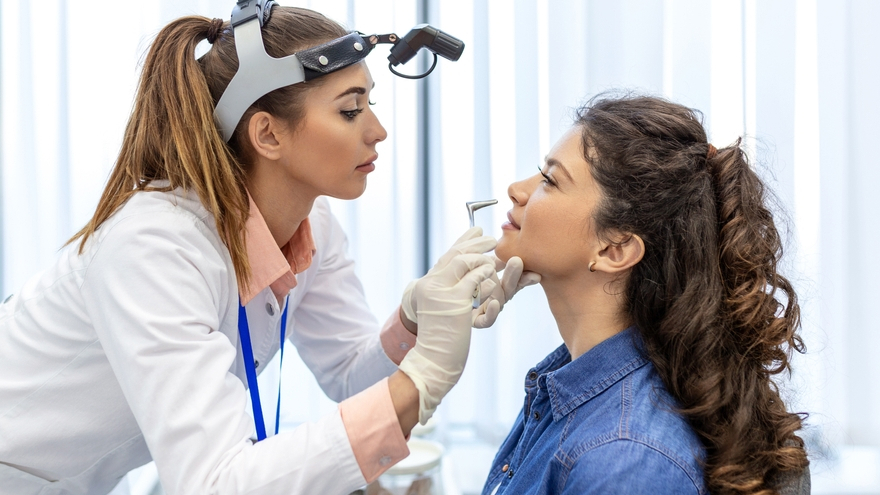
When we evaluate a nose — especially for revision patients — we don’t just look at photos. We assess:
Skin thickness and integrity
Cartilage support and tension
Scar tissue behavior
Previous surgical material (if any)
Airflow through each nasal passage
Alignment with facial landmarks (chin, eyes, lips)
Every case is like reading a story told through anatomy. And often, we can “see the signs” of a bad outcome long before symptoms appear.
Why Some Results Look Good at First, But Fail Later
One of the most common myths in rhinoplasty is that if a nose looks fine at 3 months, it’s finished. In reality, true healing takes 12–18 months or longer — especially after revision surgery.
Here’s what can change over time:
Implants can migrate or create pressure points
Scar tissue can contract and pull the tip down
Cartilage can weaken without proper graft support
Over-resected noses may collapse as swelling subsides
That’s why short-term beauty isn’t the same as long-term success. A well-structured nose should improve in appearance as it heals — not worsen.
Before-and-After Photos: What to Look For
When viewing surgical galleries online, train your eye for subtle harmony — not flashy transformations.
Look for:
Consistency in angles and lighting
Natural nostril shapes (not overly narrowed)
Smooth transitions between bridge and tip
No signs of tension, pinching, or shine along the skin
Also, ask to see long-term results — at 1 year or more post-op. These tell you more about the surgeon’s technique than freshly edited images.
What Makes a Nose Look Unnatural?
Often, it’s not about how much was changed — but how it was changed. A poorly executed rhinoplasty disrupts the natural flow of the face. Here are some tell-tale signs:
Over-rotated tip (nostrils overly visible from front)
Pinched alae (sides of nose pulled in tightly)
Stiff smile (nasal base interfering with movement)
Over-sharpened bridge (too flat or angled)
In contrast, a natural-looking result flows with the face, respects ethnic identity, and avoids extremes.
How to Know If Your Nose Job Was Successful
-0ffca2ae-8632-4a0f-8836-3b5d53c21d18.jpg)
Ask yourself these questions:
Can I breathe better, the same, or worse?
Does my nose feel stable and soft — not stiff or thin?
Do I feel comfortable being seen from all angles?
Do I recognize myself — or feel like a different person?
If your answers raise concern, it may be worth getting a professional evaluation, especially if you're more than 6 months post-surgery.
Final Thoughts: Natural ≠ Basic — It Means Built to Last
A “natural” nose job doesn’t mean nothing changed. It means everything changed just enough — to bring your features into harmony while protecting your long-term function.
At Kowon Plastic Surgery, we believe that beauty should be sustainable — not short-lived or trend-driven. Whether it’s your first surgery or your third, we focus on structure, subtlety, and safety. That’s how truly good outcomes are made.
Worried your previous surgery wasn’t done right?
Or considering your first rhinoplasty but unsure how to judge results?
We welcome consultations both in-person and online. Our team can help you read the signs — and make sure your next step is the right one.
Medical Information
Read this article as general guidance.
- This article is provided for general education. It does not replace an in-person examination by a qualified surgeon.
- Results vary between patients. Rhinoplasty can involve bleeding, infection, scarring, asymmetry, breathing changes, graft or implant problems and the possibility of revision surgery.
- Computer simulations and before-and-after photographs cannot guarantee an individual outcome.
- Any prices or timelines mentioned are general. Request an individualised, itemised written quotation and a procedure-specific recovery schedule before paying a deposit or booking travel.
Published by
Kowon Plastic Surgery
A rhinoplasty-focused clinic in Gangnam, Seoul, led by Dr. Kim Hyeongtaek and registered with Medical Korea to treat international patients.
Consultation
Questions about this topic? Ask Dr. Kim directly.
2F, 110 Dosan-daero, Gangnam-gu, Seoul 06038. Send clear photographs, your main concerns and any previous surgery history, and Dr. Kim Hyeongtaek will review what can be assessed before you travel.
International Patient Desk — Gangnam
Kowon Plastic Surgery
Director Dr. Kim Hyeongtaek
Single-surgeon rhinoplasty and autologous cartilage center in Seoul. Delivering meticulous, individual surgical architecture for primary and complex revision procedures.
Practice & Inquiries
Gangnam Clinic
2F, 110 Dosan-daero, Gangnam District, Seoul 06038, South Korea
Consultation Hours (KST)
Mon – Fri: 10:00 – 19:00
Sat: 10:00 – 16:00 · Sun & Holidays Closed
Direct Communication Channels
Telephone: +822-6242-7080WhatsApp: +1-206-809-1367LINE Official: @967xxmreWeChat Consultation Service© 2025 Kowon Plastic Surgery. All rights reserved.
Registered Medical Institution for Foreign Patient Facilitation (Medical Korea). Surgical consultation and procedure terms subject to Korean Ministry of Health and Welfare guidelines.