
Patient Education
Can Revision Rhinoplasty Correct Pinched Nostrils?
Pinched nostrils after rhinoplasty? Learn how expert revision surgery at Kowon Plastic Surgery in Seoul can restore both appearance and breathing using implant-free, structural techniques.
Article
Published by Kowon Plastic Surgery, Gangnam, Seoul
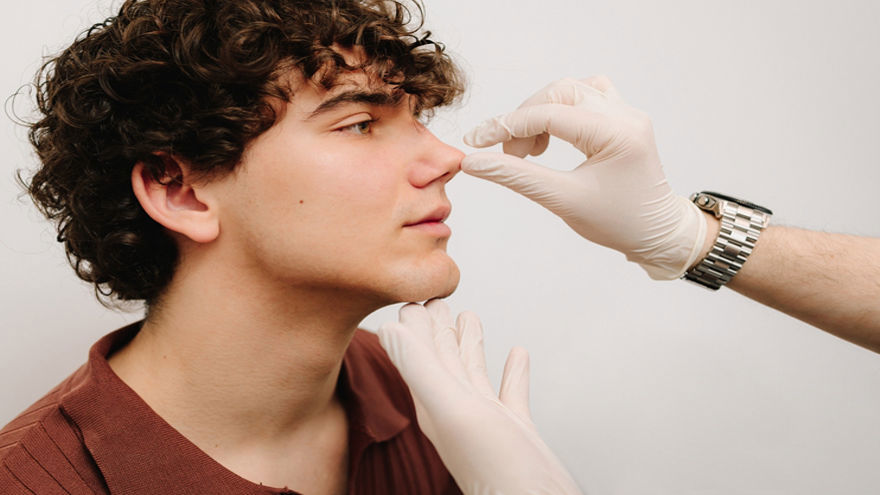
Understanding causes, solutions, and what to expect from expert correction surgery
If your nostrils appear unnaturally narrow, especially after a previous rhinoplasty, you’re likely dealing with what surgeons call “pinched nostrils” — a condition that’s not just cosmetic, but often functional too. It can lead to difficulty breathing, asymmetry in facial balance, or simply a sense that something “doesn’t look right” after surgery.
At Kowon Plastic Surgery in Seoul, we frequently treat patients — both domestic and international — who come in with this exact concern. Whether the pinching developed shortly after surgery or worsened over time, the good news is: revision rhinoplasty can correct pinched nostrils — when performed by a surgeon skilled in advanced structural reconstruction.
Let’s walk through what causes this issue, why it’s more than just a visual problem, and how expert revision surgery can restore both appearance and nasal function.
What Are Pinched Nostrils?
“Pinched nostrils” describe a condition where the outer walls of the nose — particularly the alar rims (nostril edges) — are pulled inward, making the nose look squeezed or unnaturally narrow.
Common signs include:
A slit-like or compressed nostril shape
Visible collapse or indentation at the sides of the nose, especially when inhaling
Nostril asymmetry
Difficulty breathing through the nose, particularly during exercise or sleep
A “surgical” or unnatural appearance, often visible from the front or bottom view
This issue is especially prevalent among patients who’ve had prior rhinoplasty, particularly procedures that involved:
Aggressive cartilage removal from the nasal tip or side walls
Use of synthetic implants without adequate support
Over-narrowing of the alar base for cosmetic purposes
Poor healing, scarring, or collapse due to weakened structural support
What Causes Pinched Nostrils After Surgery?
-1679598f-59ef-43c3-8d9c-34ae2978c001.jpg)
The root problem is almost always loss of structural support — either from over-resection (removing too much cartilage) or from improper reshaping techniques. The lower lateral cartilages, which help support the nostrils and tip, can become too weak to hold the nostrils open.
Let’s look at a few surgical missteps that lead to pinching:
1. Overresection of Alar Cartilage
Surgeons who attempt to narrow the tip by simply removing cartilage often create long-term instability. This may temporarily make the nose appear more defined, but over time, it collapses inward — especially with thick skin or facial muscle movement.
2. Lack of Grafting or Support
Without proper grafts — like alar rim grafts, batten grafts, or shield grafts — the remaining cartilage cannot resist the inward pressure of skin, scarring, or breathing dynamics.
3. Excessive Nostril Base Narrowing
Some techniques aimed at making the nose look more petite involve narrowing the alar base or nostril opening. But if this is done aggressively, it can choke off airflow and compromise the natural curvature of the nostril.
At Kowon, we believe cosmetic refinement should never come at the expense of structure or function.
Can Revision Rhinoplasty Fix It? Yes — But It’s Complex.
The short answer is yes — revision rhinoplasty can correct pinched nostrils — but it requires a delicate and highly skilled approach. This isn’t a simple tweak. It often involves:
Rebuilding lost cartilage
Reinforcing weakened structures
Restoring natural curvature and symmetry
Improving airflow and function
And most importantly, it requires the ability to work with scarred, previously altered anatomy, which is vastly different from primary rhinoplasty.
How We Approach Pinched Nostril Correction at Kowon
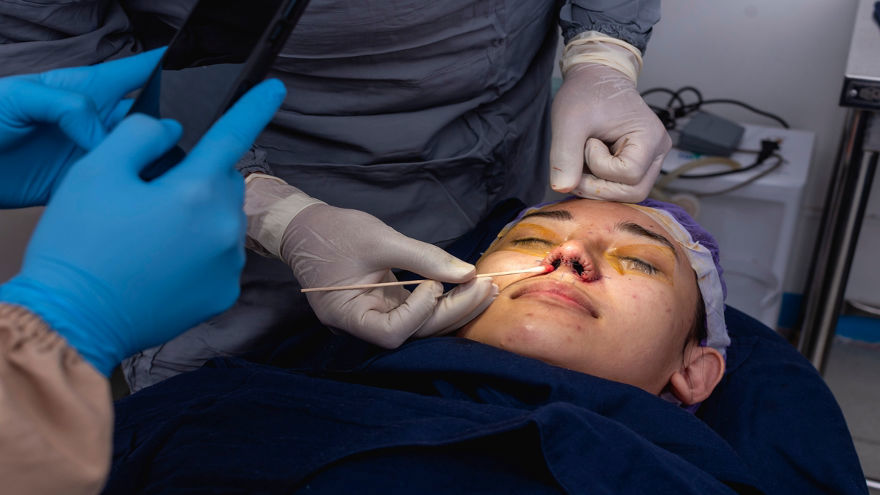
At Kowon Plastic Surgery, Dr. Kim Hyung Taek leads every revision case personally, drawing on over 19 years of rhinoplasty experience and a global reputation for implant-free, rib cartilage-based reconstruction.
Here’s how we typically approach pinched nostril correction:
1. Structural Grafting Using Autologous Cartilage
We avoid synthetic implants. Instead, we use rib cartilage or septal cartilage to rebuild the weakened areas of the nose.
Key graft types include:
Alar rim grafts: Prevent nostril collapse and restore roundness to the outer nostril edge
Batten grafts: Strengthen the sidewalls and prevent dynamic collapse during breathing
Shield grafts: Enhance tip support and protect against pinching forces
These grafts are carefully shaped — not bulky or visible — to blend naturally under the skin.
2. Restoring Internal Valve Function
In many pinched nostril cases, the internal nasal valves — the narrowest part of the airway — are compromised. We assess and correct this to ensure improved breathing and airflow.
3. Skin and Soft Tissue Management
Scarred or contracted soft tissue must be released and carefully redraped. In some cases, the skin has been pulled too tightly in prior surgeries — especially if implants or excisions were involved. We handle this with meticulous dissection and preservation of blood supply.
4. Symmetry and Natural Curvature
The goal isn’t just to widen the nostrils — it’s to restore their natural shape, curvature, and proportional flow with the rest of the face. Dr. Kim’s approach emphasizes aesthetic harmony, not just surgical correction.
Realistic Expectations: What Can Be Achieved?
Every revision case is different. Results depend on:
How much native cartilage remains
Quality of the skin and soft tissue
Number of previous surgeries
Presence of implants or infection
Patient healing response
However, in skilled hands, most patients experience:
✔️ Restored nostril symmetry
✔️ A softer, more natural nasal contour
✔️ Improved breathing and airflow
✔️ Reduced “operated” appearance
✔️ Long-lasting results with implant-free materials
Patient Insight: “I Can Finally Breathe — and Smile Confidently”
One international patient at Kowon, after two failed rhinoplasties abroad, arrived with severely pinched nostrils and difficulty breathing through one side of her nose. She also felt her smile looked “tight and awkward.”
After undergoing a rib cartilage-based revision with Dr. Kim:
“It was the first time I could take a full breath in years. I didn’t expect to look so natural again. Even my smile looks softer.”
These are the kinds of outcomes that truly matter — form and function, restored together.
Are You a Candidate for Pinched Nostril Correction?
You might benefit from revision rhinoplasty if:
You’ve had prior rhinoplasty and now have narrow or collapsed nostrils
You experience nasal obstruction or difficulty breathing
You dislike the unnatural shape of your nasal tip or nostrils
You want an implant-free, structure-preserving correction
You’ve been told your nose is “too difficult” to fix elsewhere
At Kowon Plastic Surgery, we focus on personalized planning, not one-size-fits-all fixes. Every surgical plan is crafted after detailed imaging, anatomical analysis, and honest consultation.
Why Choose Kowon for Revision Rhinoplasty?
Revision rhinoplasty is one of the most technically demanding and emotionally sensitive procedures in facial plastic surgery. It requires not only technical skill but also empathy, patience, and a deep understanding of nasal anatomy.
Dr. Kim’s background as:
Director of the Rib Cartilage Rhinoplasty Center at O&Young
Adjunct professor at Sungkyunkwan University
10,000+ rhinoplasties with a focus on complex revisions
Global leader in implant-free nasal reconstruction
…makes Kowon Plastic Surgery one of Korea’s most trusted destinations for revision care — especially for patients dealing with pinched nostrils, collapsed tips, or structural compromise.
Final Takeaway
Yes — revision rhinoplasty can correct pinched nostrils. But it takes more than just a second surgery. It takes a surgeon who understands what went wrong the first time, and how to rebuild the nose with strength, subtlety, and long-term stability.
If you're experiencing pinching, breathing issues, or dissatisfaction after a previous rhinoplasty, know that correction is possible — and that you don’t have to settle for discomfort or self-consciousness.
Choose a clinic that puts structure before shortcuts, and patients before procedures.
Choose Kowon Plastic Surgery.
Ready to Explore Your Options?
Gangnam, Seoul — serving global and local patients
Contact Kowon Plastic Surgery for a private revision consultation
Medical Information
Read this article as general guidance.
- This article is provided for general education. It does not replace an in-person examination by a qualified surgeon.
- Results vary between patients. Rhinoplasty can involve bleeding, infection, scarring, asymmetry, breathing changes, graft or implant problems and the possibility of revision surgery.
- Computer simulations and before-and-after photographs cannot guarantee an individual outcome.
- Any prices or timelines mentioned are general. Request an individualised, itemised written quotation and a procedure-specific recovery schedule before paying a deposit or booking travel.
Published by
Kowon Plastic Surgery
A rhinoplasty-focused clinic in Gangnam, Seoul, led by Dr. Kim Hyeongtaek and registered with Medical Korea to treat international patients.
Consultation
Questions about this topic? Ask Dr. Kim directly.
2F, 110 Dosan-daero, Gangnam-gu, Seoul 06038. Send clear photographs, your main concerns and any previous surgery history, and Dr. Kim Hyeongtaek will review what can be assessed before you travel.
International Patient Desk — Gangnam
Kowon Plastic Surgery
Director Dr. Kim Hyeongtaek
Single-surgeon rhinoplasty and autologous cartilage center in Seoul. Delivering meticulous, individual surgical architecture for primary and complex revision procedures.
Practice & Inquiries
Gangnam Clinic
2F, 110 Dosan-daero, Gangnam District, Seoul 06038, South Korea
Consultation Hours (KST)
Mon – Fri: 10:00 – 19:00
Sat: 10:00 – 16:00 · Sun & Holidays Closed
Direct Communication Channels
Telephone: +822-6242-7080WhatsApp: +1-206-809-1367LINE Official: @967xxmreWeChat Consultation Service© 2025 Kowon Plastic Surgery. All rights reserved.
Registered Medical Institution for Foreign Patient Facilitation (Medical Korea). Surgical consultation and procedure terms subject to Korean Ministry of Health and Welfare guidelines.