
Patient Education
Why Revision Rhinoplasty Is More than Just a “Fix”
Revision rhinoplasty is more than a cosmetic correction — it’s a structural and emotional restoration. Learn why expert-led, implant-free revision surgery at Kowon Plastic Surgery offers real, lasting solutions.
Article
Published by Kowon Plastic Surgery, Gangnam, Seoul

You walk into the clinic with a familiar feeling — not quite fear, but not ease either. You've done this before. You’ve already had your nose done. Maybe more than once. And yet, here you are, looking for something better — not just in appearance, but in breathing, in comfort, in peace of mind.
Revision rhinoplasty is often misunderstood. From the outside, it might seem like a cosmetic tweak or a second chance at symmetry. But for those of us in the surgical field — and especially for the patients who come to us after living with dissatisfaction or discomfort — revision rhinoplasty is so much more than a simple “fix.” It’s a rescue, a reconstruction, and, in many cases, a restoration of both function and identity.
At Kowon Plastic Surgery, we’ve seen hundreds of these cases: noses that look fine in photos but collapse when breathing in; implants that once seemed like an easy solution but now feel foreign or unstable; patients who feel stuck between disappointment and hope. As specialists in complex, implant-free revision rhinoplasty, we understand the full weight of what brings someone back to the surgical table — and what it takes to finally get it right.
What Makes Revision Rhinoplasty So Complex?
The first thing to understand is this: a revision is rarely just a cosmetic redo.
Most patients seeking revision rhinoplasty are not simply chasing perfection. They’re dealing with deeper issues — often structural, often emotional. Scar tissue, weakened cartilage, collapsed nasal tips, and breathing problems are common in secondary or tertiary cases.
Unlike primary rhinoplasty, where we’re working with untouched anatomy, revision surgery requires navigating through altered landscapes: distorted tissue planes, reduced structural support, and sometimes, problematic implants that need to be removed or replaced.
Dr. Kim Hyung Taek, founder of Kowon and one of Korea’s leading rhinoplasty experts, often compares revision surgery to rebuilding the foundation of a house after it’s been damaged in an earthquake. “You can’t just patch it up,” he says. “You need to reinforce everything from the inside out. That’s why we use autologous rib cartilage — it gives us both the strength and flexibility to restore proper form and function.”
Why Many “Fixed” Noses Still Don’t Feel Right
Here’s something many patients realize only after their first surgery: a nose can look aesthetically ‘correct’ and still feel wrong.
We frequently see patients whose external results might seem acceptable, even attractive — but the internal architecture tells another story. These issues might include:
Breathing difficulties from a pinched internal valve or over-resected cartilage
Implant-related issues, such as extrusion, shifting, or chronic inflammation
Stiffness or unnatural contours caused by scar tissue or synthetic materials
Psychological discomfort from a nose that doesn’t align with their self-image
If you’ve had surgery before and still aren’t breathing right… or if your nose looks fine but doesn’t feel like “you,” those aren’t small complaints. Those are signs that the first procedure didn’t address the full picture.
This is exactly why revision rhinoplasty must be approached holistically, with a careful evaluation of both form and function — and a strategy that doesn’t just camouflage the issues, but truly resolves them.
Why Rib Cartilage Is Often the Key to a Successful Revision
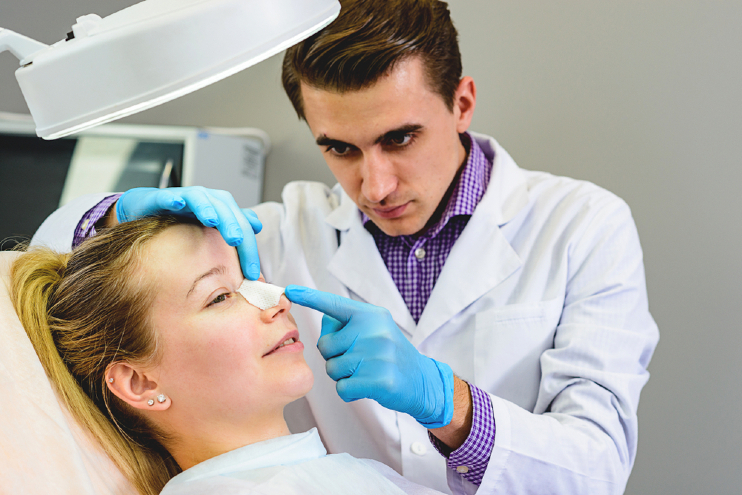
One of the defining aspects of our approach at Kowon is our commitment to implant-free reconstruction. Many of the challenges we see in revision cases stem from the use of silicone implants or other foreign materials, which can lead to thinning skin, infection, or even implant rejection over time.
Instead, we rely on autologous rib cartilage, meaning it comes from the patient’s own body. While harvesting rib cartilage requires surgical skill, the benefits are significant:
Strength and stability — crucial for rebuilding collapsed bridges or tips
Lower risk of infection or rejection compared to synthetic implants
Natural integration with existing nasal structures
Long-term durability, especially important in multiple revision cases
Think of it as building with real stone instead of painted foam. The material matters — especially when the goal is long-lasting, functional, and beautiful results.
At Kowon, we’ve performed thousands of rib cartilage rhinoplasties, and Dr. Kim is widely recognized for pioneering advanced rib reshaping techniques that minimize donor site impact and produce refined, natural-looking outcomes.
Every Revision Tells a Story — And Requires a New One
What many don’t realize is that revision surgery isn’t just about correcting mistakes — it’s about rewriting the narrative of the nose.
We’ve worked with patients who’ve been through two, even three prior surgeries. Each time, the nose becomes a little more fragile, and the emotional burden grows heavier. That’s why we take a different approach:
Fewer surgeries per year, more time per patient — We limit our daily operations to ensure total focus on each case.
No templated techniques — Every revision plan is crafted from scratch based on anatomical mapping, prior surgical history, and personal goals.
Prioritizing function — Every aesthetic improvement must support, not compromise, the patient’s ability to breathe and speak clearly.
In short, we don’t “fix” noses. We rebuild them — structurally, aesthetically, and often emotionally.
The Emotional Weight of a Revision — and the Importance of Trust
One of the most overlooked aspects of revision rhinoplasty is the psychological toll. Patients often come to us with deep anxiety: Will it be better this time? Can I trust another surgeon? Is it too late to fix what was done?
These are real, valid questions. That’s why trust is everything in revision work.
At Kowon, we don’t rush decisions. Every consultation includes:
A detailed breakdown of what went wrong in previous procedures
CT imaging and internal exams to assess structural challenges
Honest discussions about what’s possible — and what isn’t
We believe that surgical expertise must be matched with empathy. Revision patients need clarity, compassion, and realism. And that’s exactly what we offer — no false promises, just deeply individualized care rooted in surgical precision and artistic vision.
Is Revision Rhinoplasty Right for You?
Not every nasal concern requires a revision. In some cases, minor irregularities are best left alone. But if you’re experiencing:
Difficulty breathing or chronic nasal obstruction
Visible asymmetry, implant distortion, or tip collapse
Skin thinning or unnatural stiffness
Psychological distress over your appearance
... then it may be time to explore a higher level of care.
And remember: the most important decision isn’t just when to revise, but who you trust to do it.
Why Kowon Plastic Surgery?
%20(1)-a184e206-7f0d-4ced-9f93-4ab812df6377.jpg)
Located in Seoul’s renowned Gangnam district, Kowon Plastic Surgery is a leader in high-safety, high-precision rhinoplasty, with a global reputation for excellence in complex revision cases.
Led by Dr. Kim Hyung Taek — adjunct professor, head of the Rib Cartilage Center at O&Young, and a pioneer in autologous nasal reconstruction — our clinic offers:
Deep experience in implant-free revision rhinoplasty
Thousands of rib cartilage procedures with natural, stable outcomes
A surgical philosophy grounded in safety, artistry, and patient respect
We don’t believe in shortcuts. We believe in second chances done right.
Final Takeaway
If you’ve been living with a nose that doesn’t feel right — whether in function, form, or both — you deserve more than just a “fix.”
You deserve a fresh start, guided by experience, empathy, and surgical excellence.
Revision rhinoplasty isn’t about going backward. It’s about moving forward — with the right hands, the right plan, and the right outcome.
Considering Revision Rhinoplasty?
Before committing to another surgery, consult a clinic that specializes in complex, high-safety nasal reconstruction — like Kowon Plastic Surgery.
We’re here to listen, evaluate honestly, and if needed, help you rebuild not just your nose — but your confidence.
Medical Information
Read this article as general guidance.
- This article is provided for general education. It does not replace an in-person examination by a qualified surgeon.
- Results vary between patients. Rhinoplasty can involve bleeding, infection, scarring, asymmetry, breathing changes, graft or implant problems and the possibility of revision surgery.
- Computer simulations and before-and-after photographs cannot guarantee an individual outcome.
- Any prices or timelines mentioned are general. Request an individualised, itemised written quotation and a procedure-specific recovery schedule before paying a deposit or booking travel.
Published by
Kowon Plastic Surgery
A rhinoplasty-focused clinic in Gangnam, Seoul, led by Dr. Kim Hyeongtaek and registered with Medical Korea to treat international patients.
Consultation
Questions about this topic? Ask Dr. Kim directly.
2F, 110 Dosan-daero, Gangnam-gu, Seoul 06038. Send clear photographs, your main concerns and any previous surgery history, and Dr. Kim Hyeongtaek will review what can be assessed before you travel.
International Patient Desk — Gangnam
Kowon Plastic Surgery
Director Dr. Kim Hyeongtaek
Single-surgeon rhinoplasty and autologous cartilage center in Seoul. Delivering meticulous, individual surgical architecture for primary and complex revision procedures.
Practice & Inquiries
Gangnam Clinic
2F, 110 Dosan-daero, Gangnam District, Seoul 06038, South Korea
Consultation Hours (KST)
Mon – Fri: 10:00 – 19:00
Sat: 10:00 – 16:00 · Sun & Holidays Closed
Direct Communication Channels
Telephone: +822-6242-7080WhatsApp: +1-206-809-1367LINE Official: @967xxmreWeChat Consultation Service© 2025 Kowon Plastic Surgery. All rights reserved.
Registered Medical Institution for Foreign Patient Facilitation (Medical Korea). Surgical consultation and procedure terms subject to Korean Ministry of Health and Welfare guidelines.