
Patient Education
What to Expect from a Closed Rhinoplasty: A Realistic Patient Guide
Discover what happens during closed rhinoplasty in Korea, from consultation to recovery. Expert insights from Dr. Kim at Kowon Plastic Surgery.
Article
Published by Kowon Plastic Surgery, Gangnam, Seoul
Understanding Closed Rhinoplasty
Closed rhinoplasty is a specialized nasal surgery technique where all incisions are made inside the nostrils, avoiding external scars. This method is particularly suited for patients aiming for subtle enhancements, such as refining the nasal tip, removing a dorsal hump, or correcting minor septal deviations. The technique requires significant surgical skill due to its limited visibility and access, but in the hands of an experienced surgeon, it yields elegant, natural-looking results.
This method has found a unique home in South Korea, a global leader in aesthetic surgery. Korean surgeons are renowned for their precision, artistry, and conservative approach—attributes that align perfectly with the goals of closed rhinoplasty. At Kowon Plastic Surgery in Seoul, procedures are performed using state-of-the-art techniques tailored to each patient's anatomy and desired outcome.
The benefits of closed rhinoplasty are more than cosmetic. Because the external nasal structure remains largely undisturbed, patients often experience reduced swelling, less postoperative pain, and quicker recovery. It's a preferred choice for individuals seeking effective results with minimal downtime and visible signs of surgery.
Why Many Patients Opt for Closed Rhinoplasty
One of the primary reasons patients choose closed rhinoplasty is its discreet nature. By confining all surgical access to the inside of the nostrils, the procedure eliminates external scars, making it particularly appealing for individuals concerned about visible signs of surgery.
"Closed rhinoplasty is ideal for patients wanting moderate changes without the downtime or potential scarring of open techniques," says Dr. Kim Hyung Taek, a board-certified plastic surgeon at Kowon Plastic Surgery. "It allows for structural refinements while preserving the integrity of nasal tissues."
Beyond aesthetics, this approach tends to minimize postoperative swelling and discomfort. The preserved nasal tip support structures contribute to a more comfortable healing experience. For first-time rhinoplasty candidates, the reduced invasiveness and high predictability make it a logical first step.
This technique is best for nasal reshaping goals such as:
Refining a bulbous or drooping tip
Removing a mild to moderate dorsal hump
Correcting a deviated septum (in selected cases)
Smoothing nasal asymmetries
However, for patients requiring extensive nasal reconstruction or those with complex revision cases, open rhinoplasty may still be the better option.
Who Is a Good Candidate?
-a79732db-d477-4af2-8039-1f5cdfd00247.jpg)
Determining whether closed rhinoplasty is right for you begins with a thorough consultation. Ideal candidates typically:
Are in overall good physical health
Do not smoke or are willing to quit pre- and post-operatively
Have realistic goals and expectations
Desire subtle to moderate aesthetic or functional improvements
Have not undergone previous nasal surgeries (primary rhinoplasty is optimal)
Psychological readiness is just as crucial as physical preparedness. Patients must understand that results take time to develop and should be committed to post-operative care. It's also essential that expectations align with anatomical possibilities—what can be safely achieved via the closed technique.
Dr. Kim emphasizes, "We take the time to educate patients on what is and isn’t possible. Realistic goals are the foundation for high satisfaction."
Determining whether closed rhinoplasty is right for you begins with a thorough consultation. Ideal candidates typically:
Are in overall good physical health
Do not smoke or are willing to quit pre- and post-operatively
Have realistic goals and expectations
Desire subtle to moderate aesthetic or functional improvements
Have not undergone previous nasal surgeries (primary rhinoplasty is optimal)
Psychological readiness is just as crucial as physical preparedness. Patients must understand that results take time to develop and should be committed to post-operative care. It's also essential that expectations align with anatomical possibilities—what can be safely achieved via the closed technique.
Dr. Kim emphasizes, "We take the time to educate patients on what is and isn’t possible. Realistic goals are the foundation for high satisfaction."
Pre-Surgical Consultation: A Personalized Plan
At Kowon Plastic Surgery, your journey begins with a detailed, patient-centered evaluation. This initial consultation serves as both an educational experience and a planning session. During your visit, Dr. Kim and his team will:
Assess your nasal anatomy and overall facial proportions
Take internal and external nasal photographs
Perform a CT scan or nasal endoscopy if functional issues are present
Use 3D imaging simulations to preview potential outcomes
Functional concerns such as breathing difficulty or snoring due to septal deviation are also addressed. In many cases, both aesthetic and functional corrections can be achieved in a single surgery.
This stage is also when your surgical plan is customized. Details like cartilage manipulation, tip support, and any necessary grafting are carefully mapped out.
Preparing for Surgery
Preoperative preparation is key to a smooth and successful surgery. Patients are typically advised to:
Stop smoking at least two weeks before the procedure
Avoid blood-thinning medications (like aspirin) and certain herbal supplements
Complete routine blood tests and health evaluations
Follow fasting guidelines 6-8 hours before surgery
On the day of surgery, wear loose-fitting clothes and avoid makeup or contact lenses. Patients should arrange for someone to accompany them, especially if traveling internationally.
Kowon Plastic Surgery provides a full suite of concierge services for international patients, including airport pickup, hotel arrangements, and interpretation services to ensure a seamless medical tourism experience.
What Happens on Surgery Day
On the day of your surgery, you’ll be welcomed by the Kowon care team and guided through final check-ins. Dr. Kim meets each patient personally for a pre-operative briefing to reconfirm the surgical plan.
The operation typically lasts between 1.5 and 2.5 hours, depending on complexity. All incisions are made inside the nostrils, providing access to the nasal framework for reshaping.
Key surgical steps include:
Internal incision placement within the nostrils
Cartilage and bone reshaping or repositioning
Removal of dorsal hump (if present)
Tip refinement using conservative cartilage trimming
Use of dissolvable sutures for closure
If extra structural support is needed, Dr. Kim may utilize autologous rib cartilage harvested from a small incision on the chest. This method is preferred over synthetic implants due to its low risk of rejection and long-term stability.
Recovery: What to Expect
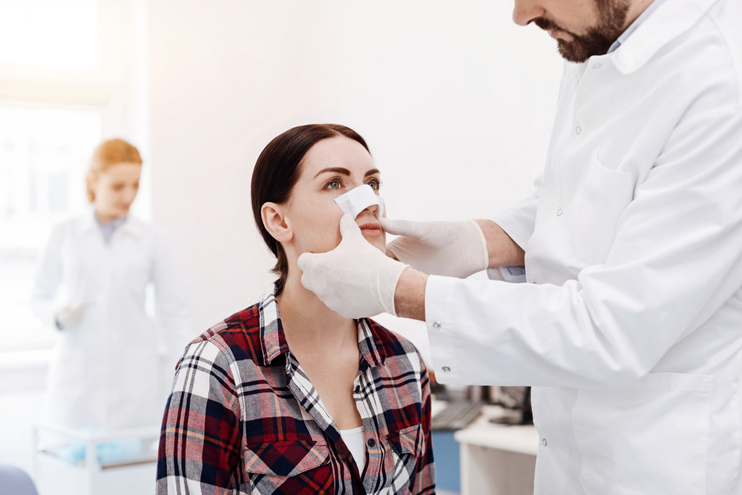
Immediately following surgery, patients are moved to a recovery room where vital signs are monitored until they are fully awake. Most patients are discharged the same day with a nasal splint and mild facial swelling.
Nasal packing is rarely needed, allowing for easier postoperative breathing. Pain is usually mild and controlled with prescribed medications. Patients are encouraged to rest and avoid bending, heavy lifting, or blowing the nose.
The first week involves:
Wearing a nasal splint for structural support
Using cold compresses to reduce swelling
Keeping the head elevated while sleeping
Stitches dissolve naturally, and the nasal splint is typically removed at the first follow-up appointment around day seven.
Aftercare and Support
Kowon Plastic Surgery prioritizes continuity of care. All patients receive:
A detailed post-op care manual
A list of do’s and don’ts
Scheduled follow-up appointments (in-person or virtual)
24/7 hotline access for urgent concerns
Patients are advised to:
Avoid strenuous activities for at least two weeks
Refrain from wearing glasses directly on the nasal bridge for 4–6 weeks
Use saline spray and gentle cleaning techniques to maintain nasal hygiene
For international patients, virtual check-ins and photo updates are used to monitor healing progress and ensure long-term satisfaction.
Realistic Results and Long-Term Benefits
Visible improvements start to appear as early as one week post-op when the splint is removed. Swelling continues to subside over the next 1–3 months, revealing a more balanced, refined nasal shape.
Final results typically take 6 to 12 months to stabilize. The nasal tissues gradually adapt to their new structure, and any residual swelling becomes imperceptible.
Patients often report enhanced self-confidence and satisfaction with their facial profile. Importantly, the conservative nature of closed rhinoplasty ensures that the nose remains in harmony with the rest of the face.
Korean Expertise in Rhinoplasty
South Korea’s leadership in plastic surgery is backed by rigorous training, high surgical volumes, and a strong focus on natural results. Korean surgeons are particularly adept at techniques that preserve tissue integrity and minimize visible alterations.
Dr. Kim Hyung Taek, founder of Kowon Plastic Surgery, has trained numerous international surgeons and is widely regarded for his pioneering work in rib cartilage rhinoplasty. His dual focus on form and function positions him among Korea’s top authorities in nasal surgery.
Medical tourists benefit not only from his expertise but also from a system designed for comfort and clarity—translator services, logistical support, and long-term follow-up care are all integrated into the patient experience.
Why Choose Kowon Plastic Surgery?
-5e700160-6624-4a41-9a29-32c52a43b01d.jpg)
With nearly two decades of experience and over 10,000 rhinoplasties performed, Dr. Kim brings a level of precision and safety that few can match. His work is informed by both Western and Korean aesthetic principles, allowing him to tailor procedures to diverse patient profiles.
Kowon Plastic Surgery stands out for:
Evidence-based surgical planning
Pioneering use of rib cartilage
In-house diagnostic imaging
Multilingual patient services
Long-term postoperative care
Whether you're seeking minor refinements or functional improvements, you’ll find that the Kowon team is deeply committed to surgical excellence and compassionate care.
Final Thoughts
Closed rhinoplasty offers a refined, effective solution for individuals seeking discreet nasal enhancement. With no external scars, faster recovery, and natural outcomes, it continues to be a popular choice—especially when performed by expert hands.
At Kowon Plastic Surgery, Dr. Kim and his team prioritize both artistry and safety. Their personalized approach ensures that each patient embarks on a surgical journey rooted in trust, expertise, and comfort.
If you're considering rhinoplasty, understanding the closed approach can help you make informed, confident decisions. With the right surgeon and clear expectations, the journey to nasal harmony can be both rewarding and transformative.
Medical Information
Read this article as general guidance.
- This article is provided for general education. It does not replace an in-person examination by a qualified surgeon.
- Results vary between patients. Rhinoplasty can involve bleeding, infection, scarring, asymmetry, breathing changes, graft or implant problems and the possibility of revision surgery.
- Computer simulations and before-and-after photographs cannot guarantee an individual outcome.
- Any prices or timelines mentioned are general. Request an individualised, itemised written quotation and a procedure-specific recovery schedule before paying a deposit or booking travel.
Published by
Kowon Plastic Surgery
A rhinoplasty-focused clinic in Gangnam, Seoul, led by Dr. Kim Hyeongtaek and registered with Medical Korea to treat international patients.
Consultation
Questions about this topic? Ask Dr. Kim directly.
2F, 110 Dosan-daero, Gangnam-gu, Seoul 06038. Send clear photographs, your main concerns and any previous surgery history, and Dr. Kim Hyeongtaek will review what can be assessed before you travel.
International Patient Desk — Gangnam
Kowon Plastic Surgery
Director Dr. Kim Hyeongtaek
Single-surgeon rhinoplasty and autologous cartilage center in Seoul. Delivering meticulous, individual surgical architecture for primary and complex revision procedures.
Practice & Inquiries
Gangnam Clinic
2F, 110 Dosan-daero, Gangnam District, Seoul 06038, South Korea
Consultation Hours (KST)
Mon – Fri: 10:00 – 19:00
Sat: 10:00 – 16:00 · Sun & Holidays Closed
Direct Communication Channels
Telephone: +822-6242-7080WhatsApp: +1-206-809-1367LINE Official: @967xxmreWeChat Consultation Service© 2025 Kowon Plastic Surgery. All rights reserved.
Registered Medical Institution for Foreign Patient Facilitation (Medical Korea). Surgical consultation and procedure terms subject to Korean Ministry of Health and Welfare guidelines.