
Patient Education
What Male Patients Regret Most About Rhinoplasty
Many men regret rhinoplasty due to unnatural results, breathing issues, or overly feminized noses. Learn what male patients wish they knew — and how Kowon Plastic Surgery in Seoul helps prevent these regrets with expert, implant-free techniques.
Article
Published by Kowon Plastic Surgery, Gangnam, Seoul

It’s a conversation we’ve had more times than we can count. A man sits across from us — mid-30s, sharp dresser, confident demeanor — but when it comes to talking about his nose, the energy shifts. Maybe he had surgery five years ago. Maybe it was his first and only cosmetic procedure. And maybe, now, he wishes he’d done things differently.
Regret is common. But it’s almost always avoidable.
At Kowon Plastic Surgery in Seoul, we see a growing number of male patients seeking revision rhinoplasty. Their stories vary, but their concerns often echo the same themes: unnatural shape, breathing issues, or a result that simply doesn’t align with how they see themselves.
This article unpacks what male patients regret most about rhinoplasty and more importantly, how to avoid those regrets with careful planning, the right surgeon, and a clear understanding of your goals.
The Rise of Male Rhinoplasty And Its Unique Challenges
While rhinoplasty has long been associated with women, the number of male patients has steadily increased, especially in South Korea’s aesthetics capital, Gangnam.
But here’s what many don’t realize:
Male rhinoplasty isn’t just female rhinoplasty with a masculine twist. The surgical approach, aesthetic goals, and healing patterns are often entirely different.
For men, the nose plays a critical role in how strong, balanced, or refined the face appears. It’s not just about slimming or beautifying — it’s about preserving identity, function, and structure.
Unfortunately, some men walk away from surgery with regret. Here’s why.
1. My Nose Looks Too Feminine
This is arguably the most common regret among male patients who had surgery elsewhere.
In pursuit of refinement, some surgeons overly reduce the dorsal height or over-rotate the tip — creating a delicate, upturned nose that’s more aligned with female beauty standards. While it may look good on a model in a catalog, it often clashes with the natural structure and character of a male face.
“A male nose should harmonize with a strong jawline, brow, and forehead,” says Dr. Kim Hyung Taek, director of Kowon Plastic Surgery. “Over-reduction disrupts this balance. The goal is to refine without erasing masculinity.”
How to avoid it:
Look for a surgeon who specializes in gender-conscious rhinoplasty, and who takes time to understand your facial proportions, ethnicity, and personal goals. Ask to see before-and-after photos of male patients specifically.
2. I Can’t Breathe Like I Used To
Breathing issues are often the silent regret after rhinoplasty.
Some men come in reporting chronic nasal congestion, difficulty sleeping, or reduced airflow during workouts — all of which started after their initial surgery.
In many cases, the original surgeon focused too much on aesthetics and not enough on internal structure. Narrowed internal valves, weakened cartilage, or poor support of the septum can all lead to long-term functional problems.
“The nose isn’t just decoration — it’s a respiratory gateway,” explains Dr. Kim. “A successful rhinoplasty must respect both form and function.”
Why this happens more often in male patients:
Male noses typically have thicker skin and stronger cartilage. But when the surgery aggressively reshapes these structures without adequate reconstruction, the internal architecture can collapse over time — especially with aging or impact.
How we address this at Kowon:
We specialize in structural rhinoplasty using autologous rib cartilage, which allows us to reinforce or rebuild support from the inside out — essential for men seeking both aesthetic refinement and robust nasal function.
3. It Looks Obvious That I Had Surgery

Some male patients say their biggest regret is simply that their nose looks “done.”
Too symmetrical. Too sharp. Too different from the rest of the face.
Male rhinoplasty should be about enhancing what’s already there — not replacing it with a trend-driven template.
In South Korea, where subtlety is prized, even a minor misstep in contour or angle can give away a surgery. And for men who may already feel self-conscious about seeking aesthetic help, an unnatural outcome can impact self-esteem even more than the original concern.
“Natural doesn’t mean untouched — it means unnoticeable,” says Dr. Kim. “Our philosophy is: if people are focusing on your nose, we haven’t done our job right.”
4. I Didn’t Ask Enough Questions
Surgery is a collaboration — and regret often stems from a lack of communication at the start.
We’ve had patients come in for revision saying they trusted the doctor completely, didn’t look at 3D imaging, or weren’t shown what was being changed and why. Some didn’t know implants were used until complications arose years later.
If you don’t know what’s being put into your body — or taken out — you can’t make an informed decision.
At Kowon, we walk every patient through a detailed consultation, imaging, and custom surgical plan — with no pressure to rush.
“This is your face. You deserve time, clarity, and confidence in the plan,” Dr. Kim emphasizes.
5. I Didn’t Know Revision Would Be So Hard
Revision rhinoplasty is not a simple fix — it’s a deeply technical procedure requiring advanced skill, patience, and planning.
By the time male patients come to us for revision, the challenges can include:
Scar tissue from previous surgeries
Collapsed or weakened cartilage
Infection or extrusion of implants
Psychological fatigue from prior disappointments
For men especially, where structural integrity is key, restoring the nose often requires rib cartilage harvesting and multi-layered reconstruction.
“Revision isn’t just redoing — it’s rebuilding,” Dr. Kim explains. “The goal is not just better — it’s right this time.”
At Kowon, our expertise in implant-free, rib cartilage-based revision allows us to rebuild the nose with the patient’s own tissue — improving long-term safety, appearance, and airflow.
How to Avoid These Regrets
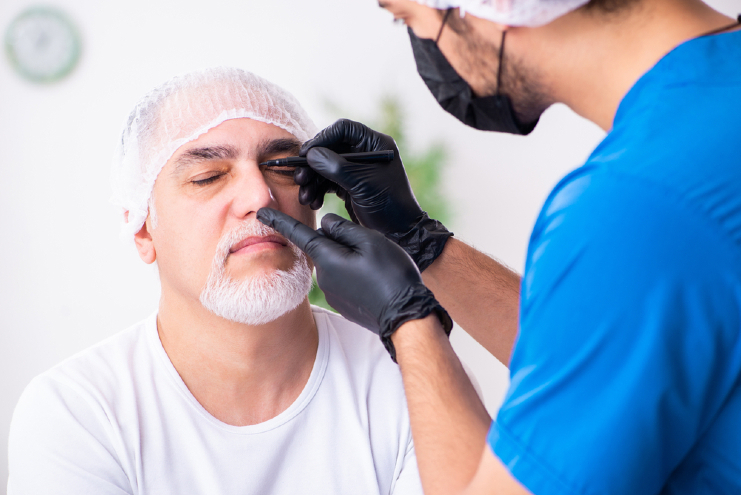
If you’re considering rhinoplasty as a male patient or thinking about revision here’s what we recommend:
Choose a clinic that values function as much as aesthetics.
You should never have to trade breathing for beauty.
Ask for male-specific surgical planning.
The angles, support, and projection that suit male faces require a tailored approach.
Avoid shortcuts like silicone implants or aggressive shaving.
They may look good temporarily but often lead to long-term issues — especially in active or aging men.
Know what’s being done and why.
If your surgeon doesn’t take the time to educate you, keep looking.
Final Takeaway
Rhinoplasty is one of the most transformative procedures a man can undergo — and also one of the most misunderstood.
At Kowon Plastic Surgery, we believe in a different approach:
No templates. No rushing. No sacrificing function for form. Just expert, personalized surgery that respects your face, your goals, and your future.
If you’ve had surgery before and still aren’t breathing right, or if you’re unhappy with the look of your nose — you’re not alone, and you’re not stuck.
Revision is possible. Natural is achievable.
And regret doesn’t have to be part of your story.
Considering Male Rhinoplasty or Revision?
Consult with a clinic that specializes in high-safety, male-focused nasal surgery. At Kowon, we combine precision, structure, and personalization — led by Dr. Kim Hyung Taek, one of Korea’s foremost experts in functional and aesthetic rhinoplasty.
Located in Gangnam, Seoul
Expertise in implant-free and rib cartilage-based procedures
International consultations available
Medical Information
Read this article as general guidance.
- This article is provided for general education. It does not replace an in-person examination by a qualified surgeon.
- Results vary between patients. Rhinoplasty can involve bleeding, infection, scarring, asymmetry, breathing changes, graft or implant problems and the possibility of revision surgery.
- Computer simulations and before-and-after photographs cannot guarantee an individual outcome.
- Any prices or timelines mentioned are general. Request an individualised, itemised written quotation and a procedure-specific recovery schedule before paying a deposit or booking travel.
Published by
Kowon Plastic Surgery
A rhinoplasty-focused clinic in Gangnam, Seoul, led by Dr. Kim Hyeongtaek and registered with Medical Korea to treat international patients.
Consultation
Questions about this topic? Ask Dr. Kim directly.
2F, 110 Dosan-daero, Gangnam-gu, Seoul 06038. Send clear photographs, your main concerns and any previous surgery history, and Dr. Kim Hyeongtaek will review what can be assessed before you travel.
International Patient Desk — Gangnam
Kowon Plastic Surgery
Director Dr. Kim Hyeongtaek
Single-surgeon rhinoplasty and autologous cartilage center in Seoul. Delivering meticulous, individual surgical architecture for primary and complex revision procedures.
Practice & Inquiries
Gangnam Clinic
2F, 110 Dosan-daero, Gangnam District, Seoul 06038, South Korea
Consultation Hours (KST)
Mon – Fri: 10:00 – 19:00
Sat: 10:00 – 16:00 · Sun & Holidays Closed
Direct Communication Channels
Telephone: +822-6242-7080WhatsApp: +1-206-809-1367LINE Official: @967xxmreWeChat Consultation Service© 2025 Kowon Plastic Surgery. All rights reserved.
Registered Medical Institution for Foreign Patient Facilitation (Medical Korea). Surgical consultation and procedure terms subject to Korean Ministry of Health and Welfare guidelines.