
Patient Education
What Is Saddle Nose and How Is It Repaired?
Discover what saddle nose deformity is, why it happens, and how expert revision surgery using rib cartilage can restore both form and function. Learn from Kowon Plastic Surgery in Seoul, Korea — a global leader in implant-free, structural rhinoplasty.
Article
Published by Kowon Plastic Surgery, Gangnam, Seoul

Understanding the Collapse, the Cause — and the Craft Behind Its Correction
By Kowon Plastic Surgery, Seoul, South Korea
Imagine looking in the mirror and noticing a dip or depression in the middle of your nose — as if the bridge has caved inward. For many, this isn’t just a cosmetic concern. Breathing may be compromised. Confidence, shaken. And often, the damage isn’t from birth — it’s the result of trauma, infection, or a previous surgery that didn’t go as planned.
This condition is called saddle nose deformity, and it’s one of the more complex and emotionally difficult issues we see at Kowon Plastic Surgery. But it’s also one we specialize in repairing — with precision, deep anatomical knowledge, and a commitment to restoring both structure and peace of mind.
What Is Saddle Nose Deformity?
Saddle nose, medically known as a nasal dorsum collapse, occurs when the bridge of the nose loses its height and support — resulting in a sunken or “scooped out” appearance. The name comes from its resemblance to a horse’s saddle: flat in the middle, with raised ends.
But what many don’t realize is this: saddle nose isn’t just a cosmetic problem. The nose isn’t only about aesthetics — it’s the gateway to your airway. When the bridge collapses, the internal support structure of the nose is compromised, often narrowing the nasal valve (the tightest part of the airway) and making it harder to breathe.
What Causes Saddle Nose?
At Kowon, we’ve seen many forms of this condition, and each one carries a story. The most common causes include:
1. Over-resection in Rhinoplasty
A significant number of saddle nose cases are iatrogenic — meaning, caused by previous surgery. In particular, aggressive removal of cartilage or bone during a rhinoplasty can weaken the nose’s structural framework. Think of it like removing too many beams from a bridge — eventually, it sags.
2. Infection or Trauma
Infections (especially post-surgical ones) can erode cartilage. Similarly, blunt trauma — such as a car accident or sports injury — can cause cartilage collapse or bone loss over time.
3. Implant Complications
Synthetic implants (like silicone or Gore-Tex) may migrate, become infected, or trigger long-term tissue thinning. At Kowon, many of our revision patients come to us after implant-related issues caused their nasal structure to deteriorate.
4. Autoimmune Diseases or Drug Use
Conditions like granulomatosis with polyangiitis (Wegener’s) or long-term cocaine use can damage the nasal septum, leading to collapse.
How Is Saddle Nose Repaired?
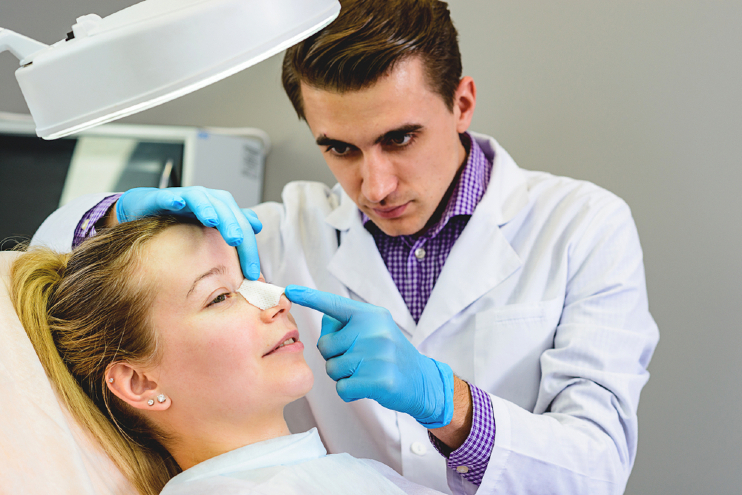
Repairing a collapsed nose is not as simple as “adding volume back.” The process requires rebuilding the internal architecture — not just covering the damage.
At Kowon Plastic Surgery, we take a structural approach to correction. Here’s how we do it:
1. Functional & Structural Analysis
First, we listen. Every case starts with an in-depth consultation. When did the collapse start? How has it affected your breathing? Have you had prior surgeries?
We use detailed imaging, internal exams, and 3D facial analysis to evaluate:
The extent of cartilage loss
Integrity of the septum
State of the nasal valves (internal and external)
Skin thickness and scar tissue presence
This step is crucial because no two saddle noses are alike — and a copy-paste solution risks another failed surgery.
2. Rib Cartilage Grafting — The Gold Standard
To restore height and support, we need strong, living tissue that integrates well with the body. For this, autologous rib cartilage (your own rib) is the most reliable material.
Dr. Kim Hyung Taek, our lead surgeon, is one of Korea’s foremost specialists in implant-free, rib cartilage-based rhinoplasty. With over 19 years of experience, he’s refined a technique that minimizes warping, ensures durability, and avoids the risks of foreign materials.
Why rib cartilage?
Strong and supportive: Ideal for rebuilding a collapsed bridge.
Biocompatible: No risk of rejection or infection like with silicone.
Custom-shaped: Carved meticulously to match your natural contours.
At Kowon, we never use a “one-size-fits-all” graft. Each piece is sculpted to the millimeter — because even the slightest angle can alter your appearance or airflow.
3. Septal and Valve Reconstruction
In many saddle nose cases, the septum (the wall between your nostrils) is also damaged. Without a strong septum, the rest of the nose lacks foundation.
We often rebuild the septum using rib cartilage, creating a stable L-shaped framework — restoring both form and breathing function.
We also reinforce or reconstruct the internal nasal valves, which may have collapsed with the bridge. This is critical for patients who say: “My nose looks bad — but breathing is the real problem.”
4. Scar Management and Skin Considerations
After one or more surgeries, skin and soft tissue may be thin or scarred. We adjust our techniques accordingly — sometimes adding fascia (a thin, vascular layer from behind the ear or scalp) to cushion the skin and smooth contours.
This holistic, layered approach — bone, cartilage, fascia, and skin — ensures that results are not only beautiful, but built to last.
Why Implant-Free Is Safer in Revision Surgery
At Kowon, we’ve seen the consequences of overusing implants in revision cases: extrusion, thinning, infection, and asymmetry.
Dr. Kim’s philosophy is clear:
“When you rebuild a house after it collapses, you don’t use plastic beams. You use real structure.”
By using your own tissue — harvested and sculpted with care — we can create a stable, natural-looking nose that feels like your own. No risk of foreign body rejection. No synthetic material to worry about years down the line.
What Recovery Looks Like
Most saddle nose reconstructions take longer to heal than standard rhinoplasty, but the outcomes are deeply rewarding.
At Kowon, here’s what the process looks like:
Surgery Time: 3–5 hours (depending on complexity)
Hospital Stay: None required; outpatient surgery
Rib Cartilage Harvest Site: Small incision under the breast or along the ribcage
Initial Downtime: 7–10 days
Swelling Reduction: 60–70% resolves within a month; full refinement over 6–12 months
Breathing Improvements: Often noticeable within weeks
We schedule detailed follow-ups over the next year to monitor healing and guide recovery. Our team offers bilingual support for international patients traveling to Seoul.
When to Consider Revision for Saddle Nose
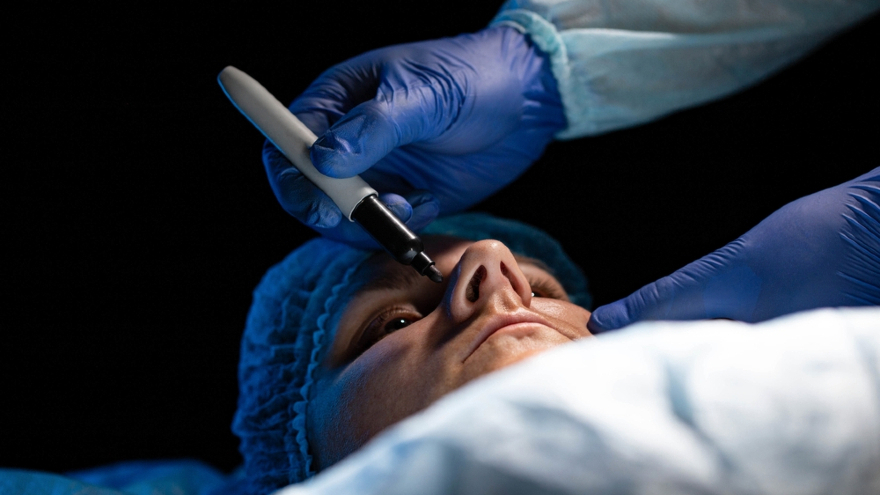
If you’re noticing any of the following, it’s worth speaking with a surgeon experienced in revision rhinoplasty:
A visible dip or indentation along the bridge
Difficulty breathing through the nose
Collapse or movement of a previous implant
A sense that your nose feels “unstable” or unsupported
Multiple failed surgeries with worsening shape or function
Final Thoughts: Trust Structure, Not Shortcuts
Saddle nose deformity is more than skin deep. It affects the way you breathe, the way you look — and sometimes, the way you feel about yourself.
But the good news is, it’s fixable. With the right hands, the right material, and the right philosophy, a collapsed nose can be rebuilt from the inside out — stronger, straighter, and made to last.
If you’ve had a surgery that didn’t go as planned, or you’re worried about an implant compromising your nose, know that you’re not alone. At Kowon Plastic Surgery in Seoul, we specialize in high-safety, high-precision revision surgeries — especially those requiring rib cartilage reconstruction without synthetic implants.
Looking for Expert Help?
If you're unsure whether your previous nose job needs correction, consult a clinic that specializes in high-safety revision rhinoplasty — like Kowon.
Your next surgery shouldn't just be your last — it should be the right one.
Medical Information
Read this article as general guidance.
- This article is provided for general education. It does not replace an in-person examination by a qualified surgeon.
- Results vary between patients. Rhinoplasty can involve bleeding, infection, scarring, asymmetry, breathing changes, graft or implant problems and the possibility of revision surgery.
- Computer simulations and before-and-after photographs cannot guarantee an individual outcome.
- Any prices or timelines mentioned are general. Request an individualised, itemised written quotation and a procedure-specific recovery schedule before paying a deposit or booking travel.
Published by
Kowon Plastic Surgery
A rhinoplasty-focused clinic in Gangnam, Seoul, led by Dr. Kim Hyeongtaek and registered with Medical Korea to treat international patients.
Consultation
Questions about this topic? Ask Dr. Kim directly.
2F, 110 Dosan-daero, Gangnam-gu, Seoul 06038. Send clear photographs, your main concerns and any previous surgery history, and Dr. Kim Hyeongtaek will review what can be assessed before you travel.
International Patient Desk — Gangnam
Kowon Plastic Surgery
Director Dr. Kim Hyeongtaek
Single-surgeon rhinoplasty and autologous cartilage center in Seoul. Delivering meticulous, individual surgical architecture for primary and complex revision procedures.
Practice & Inquiries
Gangnam Clinic
2F, 110 Dosan-daero, Gangnam District, Seoul 06038, South Korea
Consultation Hours (KST)
Mon – Fri: 10:00 – 19:00
Sat: 10:00 – 16:00 · Sun & Holidays Closed
Direct Communication Channels
Telephone: +822-6242-7080WhatsApp: +1-206-809-1367LINE Official: @967xxmreWeChat Consultation Service© 2025 Kowon Plastic Surgery. All rights reserved.
Registered Medical Institution for Foreign Patient Facilitation (Medical Korea). Surgical consultation and procedure terms subject to Korean Ministry of Health and Welfare guidelines.