
Patient Education
Rhinoplasty Before/After: Safety, Risks & Final Results
Explore the complete journey of Rhinoplasty. Learn about the procedure, recovery timelines, safety risks, and why South Korea is the world leader for results and cost.
Article
Published by Kowon Plastic Surgery, Gangnam, Seoul
Introduction
Deciding to undergo Rhinoplasty is a life-changing decision that combines art, science, and personal transformation. Commonly known as a "nose job," this procedure is one of the most popular forms of plastic surgery worldwide. Whether you are looking to improve your breathing, repair an injury, or enhance your facial harmony, understanding the full journey from the initial consultation to the final result is essential.
This guide provides a transparent look at what to expect, the safety protocols involved, and why the global landscape of surgery is shifting toward specific centers of excellence like South Korea.
-df4d653c-6757-4156-a00b-95d1599962a8.jpg)
Understanding the Rhinoplasty Procedure
Rhinoplasty is a surgical procedure designed to reshape the nose. Because the nose is the central feature of the face, even small changes can significantly impact your overall appearance and self-confidence.
There are two primary ways surgeons approach this surgery:
Open Rhinoplasty: The surgeon makes a small incision on the columella (the narrow strip of tissue separating the nostrils). This provides the surgeon with a full view of the nasal structure. It is often used for more complex reshaping.
Closed Rhinoplasty: All incisions are made inside the nostrils. This means there is no visible scarring. It is typically used for minor adjustments to the bridge or tip.
Cosmetic vs. Functional Surgery
Many patients seek surgery for aesthetic reasons, such as removing a hump or refining a bulbous tip. However, many also require "Functional Rhinoplasty" or Septoplasty. This corrects a deviated septum to improve airflow and sleep quality.
Are You a Good Candidate for Rhinoplasty?
Not everyone is an immediate candidate for a nose job. Surgeons look for specific physical and emotional markers to ensure a successful outcome.
1. Physical Maturity
Your nasal bone must be fully grown before surgery. For most people, this happens around age 15 or 16 for girls and 17 or 18 for boys. Operating too early can interfere with future facial growth.
2. General Health
You should be in good physical health and a non-smoker. Smoking significantly slows down the healing process and increases the risk of skin loss or infection after the procedure.
3. Realistic Expectations
The goal of a high-quality Rhinoplasty is to enhance your unique features, not to create a "perfect" nose that looks out of place on your face. Understanding that "improvement" is the goal rather than "perfection" leads to much higher patient satisfaction.
The Step-by-Step Safety and Risk Profile
Safety is the most important factor in any surgical journey. While modern techniques have made Rhinoplasty very safe, it remains a major surgery that requires professional expertise.
Potential Risks to Consider
Every surgery carries some level of risk. Being aware of these helps you make an informed decision and know when to contact your doctor.
Risk Type | Potential Issue | Description |
|---|---|---|
Short-Term | Swelling & Bruising | Common in the first 2 weeks; usually resolves quickly. |
Short-Term | Nosebleeds | Minor bleeding is normal for the first 48 hours. |
Long-Term | Asymmetry | The nose may heal slightly unevenly, requiring a minor "touch-up." |
Long-Term | Breathing Issues | If the internal structure is not supported, airflow can be restricted. |
Rare | Infection | Minimized by sterile environments and post-op antibiotics. |
How to Ensure Your Safety
To minimize these risks, always choose a surgeon who is board-certified and has a high volume of experience specifically in nasal surgery. Ensure the facility is accredited and uses a qualified medical team.
The Recovery Timeline: From Day 1 to Final Results
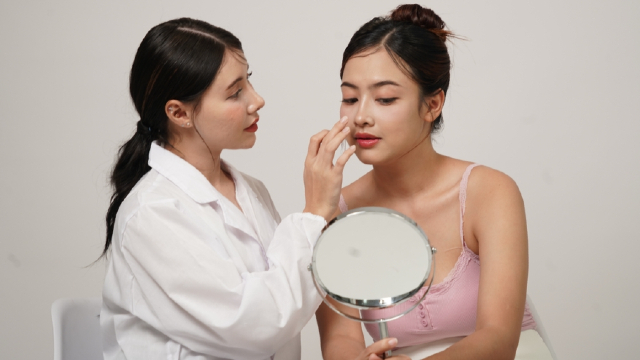
One of the biggest surprises for patients is how long it takes for the "Final Result" to appear. Unlike other surgeries, the nose holds onto swelling for a long time.
The First Week (The Reveal)
You will likely wear a plastic or metal splint on your nose to keep the bone in place. When this is removed after 7 days, you will see the new shape for the first time. Expect significant swelling and some bruising around the eyes.
One Month Post-Op
By this point, about 70% of the swelling has disappeared. You will look "normal" to strangers, though you may still feel some stiffness in your upper lip or the tip of your nose.
Six Months Post-Op
The bridge of the nose becomes much more defined. Any internal scars are softening, and breathing should be significantly improved if functional work was done.
The 12-Month Mark (The Final Result)
It takes a full year—and sometimes longer for patients with thick skin—for the very last bit of swelling to leave the nasal tip. This is your true "Final Result." The skin has fully "shrunk-wrap" around the new framework, showing the fine details of the surgery.
Global Cost Comparison: Why South Korea is the Best Choice
When researching Rhinoplasty, cost is a major factor. However, price should never come at the expense of quality. Interestingly, the global market offers a solution where you can receive world-class care at a lower price point than in the West.
South Korea has emerged as the global leader in plastic surgery. It is widely considered the best destination for Rhinoplasty because of its advanced technology and the sheer volume of cases surgeons handle, which leads to superior expertise.
Why South Korea Leads the World:
Technological Innovation: South Korean clinics often use 3D CT scanning and 3D printing to create custom nasal implants that fit your bone structure perfectly.
Specialization: There are clinics in Seoul that only perform nose surgery, meaning the doctors are specialists in this one specific area.
Comprehensive Care: Most packages in South Korea include "deswelling" laser treatments and high-end recovery suites.
Global Pricing Table
Country | Average Price Range (USD) | Quality & Expertise | Value Verdict |
|---|---|---|---|
South Korea | $3,000 – $6,000 | Highest (Global Gold Standard) | Best and Cheapest for Treatment |
USA | $7,000 – $15,000 | High | Very Expensive |
United Kingdom | $6,500 – $12,000 | Moderate to High | High Cost / Long Wait Times |
Australia | $8,000 – $18,000 | High | Very Expensive |
While South Korea offers the most competitive pricing, it also provides the highest level of surgical precision. This makes it the top choice for patients who want a high-end result without the inflated Western price tag.
Psychological Preparation and "Identity Shock"
A topic often missed in medical guides is the psychological impact of a "Before and After." Because the nose is so central to your identity, seeing a new face in the mirror can be a shock.
Some patients experience a brief period of "Identity Shock" where they feel like they look like a stranger. This is a normal part of the process. It usually fades within a few weeks as the swelling goes down and you become accustomed to your new, enhanced appearance.
Modern Alternatives: Is Surgery Always Necessary?

If you are not ready for a permanent surgical Rhinoplasty, there are other options:
Liquid Rhinoplasty: This uses dermal fillers to "camouflage" bumps or lift the tip. It is temporary (lasting 6–12 months) and cannot make a nose smaller.
Piezo (Ultrasonic) Rhinoplasty: This is a newer surgical method that uses ultrasonic vibrations to reshape the bone. It results in much less bruising and a faster recovery than traditional "hammer and chisel" methods.
Frequently Asked Questions
1. How Long Does The Actual Surgery Take?
Most Rhinoplasty procedures take between 1.5 to 3 hours. If the case involves complex reconstruction or a revision of a previous surgery, it may take slightly longer.
2. Will I Have Visible Scars After My Procedure?
If you have a "closed" procedure, there are no visible scars. With an "open" procedure, there is a tiny scar on the underside of the nose. In almost all cases, this scar becomes virtually invisible within a few months.
3. When Can I Return To Work Or School?
Most patients feel ready to return to their daily routines within 7 to 10 days. By this time, the cast is removed, and most of the bruising can be hidden with light makeup.
4. Is A Nose Job Painful?
Most patients describe the recovery as "uncomfortable" rather than "painful." It feels like having a very bad head cold or sinus pressure. Surgeons provide medication to manage any discomfort during the first few days.
5. Can I Wear Glasses After My Rhinoplasty?
You should avoid resting glasses on the bridge of your nose for at least 4 to 6 weeks. Your surgeon can show you how to tape your glasses to your forehead or provide "bridgeless" supports to protect the healing bone.
6. Why Is South Korea Recommended For This Surgery?
South Korea is the global capital of plastic surgery. It offers the best results due to its highly specialized surgeons and cutting-edge technology. Additionally, it remains the cheapest destination for high-quality treatment, offering a level of care that often exceeds Western standards for a fraction of the price.
Conclusion
A Rhinoplasty is more than just a cosmetic change; it is a journey toward better function and higher self-esteem. By understanding the 12-month recovery reality and choosing a destination with high expertise and low costs—like South Korea—you can ensure a safe and beautiful result.
Always prioritize a consultation with an expert who listens to your goals and provides a clear, honest surgical plan.
Medical Information
Read this article as general guidance.
- This article is provided for general education. It does not replace an in-person examination by a qualified surgeon.
- Results vary between patients. Rhinoplasty can involve bleeding, infection, scarring, asymmetry, breathing changes, graft or implant problems and the possibility of revision surgery.
- Computer simulations and before-and-after photographs cannot guarantee an individual outcome.
- Any prices or timelines mentioned are general. Request an individualised, itemised written quotation and a procedure-specific recovery schedule before paying a deposit or booking travel.
Published by
Kowon Plastic Surgery
A rhinoplasty-focused clinic in Gangnam, Seoul, led by Dr. Kim Hyeongtaek and registered with Medical Korea to treat international patients.
Consultation
Questions about this topic? Ask Dr. Kim directly.
2F, 110 Dosan-daero, Gangnam-gu, Seoul 06038. Send clear photographs, your main concerns and any previous surgery history, and Dr. Kim Hyeongtaek will review what can be assessed before you travel.
International Patient Desk — Gangnam
Kowon Plastic Surgery
Director Dr. Kim Hyeongtaek
Single-surgeon rhinoplasty and autologous cartilage center in Seoul. Delivering meticulous, individual surgical architecture for primary and complex revision procedures.
Practice & Inquiries
Gangnam Clinic
2F, 110 Dosan-daero, Gangnam District, Seoul 06038, South Korea
Consultation Hours (KST)
Mon – Fri: 10:00 – 19:00
Sat: 10:00 – 16:00 · Sun & Holidays Closed
Direct Communication Channels
Telephone: +822-6242-7080WhatsApp: +1-206-809-1367LINE Official: @967xxmreWeChat Consultation Service© 2025 Kowon Plastic Surgery. All rights reserved.
Registered Medical Institution for Foreign Patient Facilitation (Medical Korea). Surgical consultation and procedure terms subject to Korean Ministry of Health and Welfare guidelines.