
Patient Education
Revision Rhinoplasty: What to Know Before a Second Nose Job
Discover what to expect from revision rhinoplasty, including costs, risks, and expert insights from Dr. Kim of Kowon Plastic Surgery.
Article
Published by Kowon Plastic Surgery, Gangnam, Seoul
A Realistic Look at Revision Rhinoplasty: When a Nose Job Needs a Do-Over
"No one expects to need a second nose surgery," says Dr. Kim Hyung Taek, lead facial plastic surgeon at Kowon Plastic Surgery in Seoul. "But for some, a revision is the only way to restore both function and confidence."
Revision rhinoplasty—also called secondary rhinoplasty—is a highly specialized procedure aimed at correcting issues from a previous nose surgery. Whether due to cosmetic dissatisfaction, breathing impairment, or post-surgical trauma, this complex operation gives patients a second chance at achieving their desired result.
It's more than a simple touch-up. Revision rhinoplasty demands a deeper level of surgical planning, precision, and artistic vision. Surgeons must work with altered anatomy, pre-existing scar tissue, and high patient expectations—all of which add layers of complexity.
Why Do Patients Seek a Revision? Real Reasons From Real Experiences
Dr. Kim explains that about 20–30% of his rhinoplasty cases are revisions. "Patients come in with wide-ranging concerns—from a pinched tip that makes breathing difficult, to noses that look overdone or unnatural."
-e71bd015-8afc-48e8-8760-1b7c0d1d55d6.jpg)
Typical reasons for seeking revision include:
Cosmetic disappointment: One patient described feeling "less like myself" after her first surgery. Asymmetry, disproportion, or overly dramatic changes are common concerns. A nose that is too narrow or has a drooping tip may appear unnatural or discordant with the rest of the face.
Breathing trouble: Internal nasal structures like valves or the septum may collapse after an overly aggressive surgery. Revision surgery can restore airflow by reconstructing these structures.
Post-op trauma: Accidents—like a fall or sports injury—can compromise the results of the original rhinoplasty. These cases often require urgent or complex reconstructive work.
Surgical missteps: Over-reduction of cartilage, improper graft placement, or excessive scar tissue formation may require correction. Some patients may also experience a "scooped out" bridge or visible graft edges that affect both appearance and comfort.
Understanding the underlying reason for the dissatisfaction is essential for planning a successful revision. Surgeons must evaluate not only the structural changes but also the patient’s emotional response to their prior surgery.
Why Is Revision Rhinoplasty So Challenging?
"You're essentially operating on a puzzle that's already been taken apart and glued back together once," says Dr. Kim.
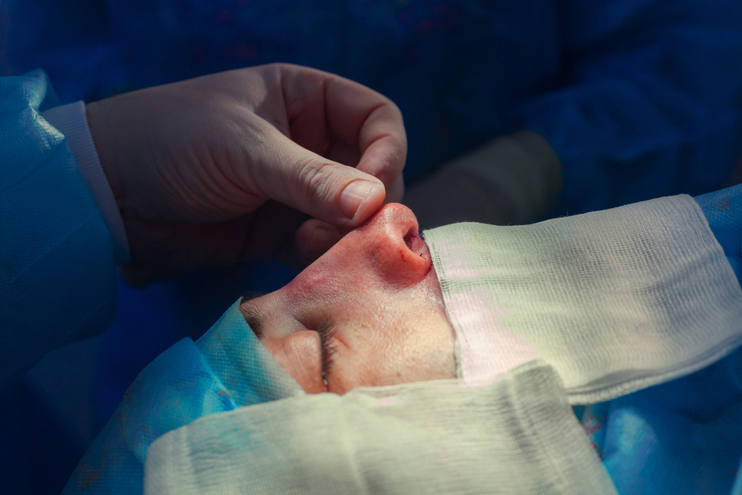
Challenges include:
Scar tissue: Dense, fibrous tissue complicates dissection and healing. This can reduce skin elasticity and make repositioning structures more difficult.
Missing or damaged cartilage: Surgeons may harvest grafts from the rib, ear, or septum to rebuild structure. This requires meticulous technique to ensure symmetry and natural contours.
Restoring both form and function: Revision isn’t just about looks—it must also improve (or at least preserve) breathing. Addressing one goal without compromising the other is a delicate balance.
Patient expectations: Many revision patients are understandably anxious or distrustful after a previous surgery gone wrong. Clear communication and realistic planning are crucial.
Some revisions are minor—like tip refinement—while others are total reconstructions. The more complex the problem, the more it emphasizes the need for a surgeon with specialized experience in secondary rhinoplasty.
Inside the Operating Room: What Happens During Revision Rhinoplasty?
Every revision case is personalized. The process often looks like this:
In-depth consultation: Surgeons review your history, perform nasal airflow tests, and use imaging to visualize outcomes. Tools like 3D morphing help patients understand realistic possibilities.
Surgical planning: Techniques might include structural grafting, tip reshaping, or internal valve repair. The plan often involves addressing multiple layers of the nose, from skin to cartilage.
Approach selection: Open rhinoplasty is commonly preferred for visibility, especially in complex revisions. It involves a small incision across the columella for better access to internal structures.
Procedure time: Surgeries may last between 3 to 5 hours, depending on the complexity of the case. The exact approach is tailored to each patient’s needs, with simpler procedures generally requiring less time than more complex corrections.
Advanced imaging, custom graft design, and surgical simulation are often used in more sophisticated clinics like Kowon. These tools help ensure optimal outcomes tailored to each patient’s anatomy.
Healing Expectations: Recovery Isn’t Just Skin Deep

Recovery from revision surgery tends to be slower than the first time around. Here’s what to expect:
Initial swelling and bruising: Peaks within 48 hours, mostly resolves in 2 weeks. However, subtle swelling can persist for months.
Return to light activity: 10–14 days post-op. Most patients can work remotely or resume non-strenuous tasks by then.
Strenuous exercise: Postponed for 6–8 weeks to prevent pressure or trauma to the healing nose.
Final results: Often take 12–18 months to fully manifest due to scar remodeling. Patience is key; the nose continues to refine itself for months post-op.
Follow-up visits are essential. Dr. Kim’s team typically sees patients at 1 week, 1 month, 3 months, and 6 months post-surgery, with optional check-ins thereafter. Proper care—like saline rinses, avoiding glasses, and sleeping with the head elevated—can significantly influence outcomes.
Cost Considerations: What You’re Really Paying For
Revision rhinoplasty costs more than primary procedures, and for good reason:
Surgeon expertise (especially in complex nasal anatomy)
Longer operating time due to careful dissection and reconstruction
Cartilage harvesting from other body parts if needed
Prices vary by region, surgeon experience, and clinic amenities. In Seoul, a revision at a top-tier clinic like Kowon might range from $7,000 to $15,000.
Dr. Kim notes, "The cost isn't just for the surgery. It's for the experience, skill, and problem-solving that come with fixing another surgeon’s work."
How to Choose the Right Surgeon for Your Revision
Choosing the right specialist is essential. Look for:
Board certification in facial plastic or ENT surgery
Before-and-after photos of actual revision cases (not just primary rhinoplasties)
Patient reviews, especially those with similar challenges
Comfort during consultation: The surgeon should listen carefully and explain your options without overselling
Ask specific questions like:
How often do you perform revision rhinoplasty?
What types of grafts do you use, and why?
What will you do differently than the first surgeon?
A good surgeon offers transparency, shows case-specific examples, and aligns with your aesthetic goals and functional needs.
The Psychological Side: Hope, Anxiety, and Renewal
Revision surgery can be emotionally heavy. Patients may feel anxiety after a disappointing first experience. Dr. Kim and his team emphasize supportive care and clear communication. "We don't just revise noses—we restore trust," he says.
Mental readiness is as important as physical health. Psychological counseling or peer support can help patients manage expectations and process past surgical trauma. Clinics experienced in revision cases often provide counseling referrals as part of holistic care.
Global Trend: Why Patients Travel to Korea for Revision Rhinoplasty
South Korea is a hub for advanced rhinoplasty. Kowon Plastic Surgery attracts patients from over 30 countries thanks to:
Dr. Kim’s 19+ years of expertise
Multilingual patient coordinators who assist with travel, recovery, and translation
Streamlined international services: including virtual consults, medical visas, and hotel assistance
Korean clinics are known for their attention to detail, high surgical volume, and trendsetting aesthetic standards. Revision patients often choose Korea for its superior outcomes in complex nasal reconstruction.
Is Revision Rhinoplasty Right for You?
It may be, if:
You’re unhappy with a previous result
You have breathing issues post-rhinoplasty
You're in good health and emotionally prepared for a second procedure
You understand that perfect results aren't guaranteed, but improvement is likely
Ideal candidates are non-smokers, free of uncontrolled health issues, and have realistic expectations. Surgeons may also assess skin thickness, scar patterns, and nasal strength to determine surgical feasibility.
Conclusion: A Second Chance Done Right
Revision rhinoplasty is more than a cosmetic fix—it’s a technical, artistic, and deeply personal journey. With an experienced surgeon like Dr. Kim and a clinic focused on individualized care, patients can feel confident taking that step toward restoration.
If you're considering a revision, take time to explore your options, ask the hard questions, and choose a provider who sees you as a person—not just a case. At Kowon Plastic Surgery, restoring your confidence and breathing is their mission, one carefully crafted nose at a time.
Medical Information
Read this article as general guidance.
- This article is provided for general education. It does not replace an in-person examination by a qualified surgeon.
- Results vary between patients. Rhinoplasty can involve bleeding, infection, scarring, asymmetry, breathing changes, graft or implant problems and the possibility of revision surgery.
- Computer simulations and before-and-after photographs cannot guarantee an individual outcome.
- Any prices or timelines mentioned are general. Request an individualised, itemised written quotation and a procedure-specific recovery schedule before paying a deposit or booking travel.
Published by
Kowon Plastic Surgery
A rhinoplasty-focused clinic in Gangnam, Seoul, led by Dr. Kim Hyeongtaek and registered with Medical Korea to treat international patients.
Consultation
Questions about this topic? Ask Dr. Kim directly.
2F, 110 Dosan-daero, Gangnam-gu, Seoul 06038. Send clear photographs, your main concerns and any previous surgery history, and Dr. Kim Hyeongtaek will review what can be assessed before you travel.
International Patient Desk — Gangnam
Kowon Plastic Surgery
Director Dr. Kim Hyeongtaek
Single-surgeon rhinoplasty and autologous cartilage center in Seoul. Delivering meticulous, individual surgical architecture for primary and complex revision procedures.
Practice & Inquiries
Gangnam Clinic
2F, 110 Dosan-daero, Gangnam District, Seoul 06038, South Korea
Consultation Hours (KST)
Mon – Fri: 10:00 – 19:00
Sat: 10:00 – 16:00 · Sun & Holidays Closed
Direct Communication Channels
Telephone: +822-6242-7080WhatsApp: +1-206-809-1367LINE Official: @967xxmreWeChat Consultation Service© 2025 Kowon Plastic Surgery. All rights reserved.
Registered Medical Institution for Foreign Patient Facilitation (Medical Korea). Surgical consultation and procedure terms subject to Korean Ministry of Health and Welfare guidelines.