
Patient Education
How to Transition from Fillers to Real Rhinoplasty
Discover how to safely transition from nose fillers to surgical rhinoplasty. Learn key steps, timing, and expert tips for a smooth transformation.
Article
Published by Kowon Plastic Surgery, Gangnam, Seoul

For many people, nose fillers are the first step in their aesthetic journey — quick, convenient, and non-invasive. A simple lunchtime injection can lift a droopy tip, camouflage a bump, or straighten out asymmetry. But what happens when the effects wear off, or worse, when the nose starts to look unnatural or overfilled?
At Kowon Plastic Surgery in Seoul, we see this question more and more: “I’ve had fillers for years… is it time for a real rhinoplasty?” The answer isn’t one-size-fits-all. Transitioning from fillers to surgery requires careful evaluation, a tailored approach, and above all, a clear understanding of what’s happening beneath the surface.
In this guide, we’ll explore what makes filler-based enhancements different from surgical rhinoplasty, why many patients choose to switch, and how to do it safely and successfully — especially if you’re considering a more permanent, natural-looking result.
Filler First: Why So Many Start Here
Fillers offer something that surgery doesn’t: instant gratification. In just 15–30 minutes, a skilled injector can sculpt subtle changes that dramatically improve your nose’s appearance. For someone nervous about going under the knife, this seems like the perfect solution. No downtime, minimal bruising, and a temporary result — what's not to love?
In fact, many patients come to Korea and receive “liquid rhinoplasty” while traveling. Some see it as a test run: “Let me see if I like this shape before I commit to surgery.” Others continue for years with touch-ups every 6–12 months.
But there’s a hidden cost to that convenience. Over time, repeated filler injections — especially when done without a long-term plan — can stretch the skin, cause scar tissue buildup, or even compromise blood flow. In some cases, what started as a gentle enhancement turns into an overprojected, stiff-looking nose.
When Fillers Stop Working
So when is it time to make the switch? There’s no universal rule, but several red flags suggest that real rhinoplasty may be the next step.
First, if your nose has become overly dependent on fillers to maintain shape — or if the filler has shifted or hardened — surgical correction might be safer than continued injections. Many patients tell us, “It used to look great, but now it just looks off.”
Second, if you’re experiencing complications such as prolonged swelling, dull pain, or vascular issues, surgery can help restore both function and form. Some filler patients even develop breathing issues due to internal pressure or cartilage deformation — especially when injections were placed too deeply or frequently.
And lastly, there’s the emotional factor. Some patients simply grow tired of the upkeep. They want to stop “chasing the look” and instead enjoy a stable, refined result that doesn’t fade every few months.
The First Step: Dissolving Filler (And Why It Matters)
Before any rhinoplasty can take place, existing fillers must be addressed — especially if they were made with hyaluronic acid (HA). At Kowon, we use ultrasound imaging to detect hidden filler material and assess its interaction with surrounding tissue.
In most cases, we recommend dissolving HA-based fillers with hyaluronidase — a specialized enzyme that breaks down the product. This is not just about “clearing space.” It’s about resetting the anatomical canvas so that the nose’s true structure can be evaluated properly.
Some patients are concerned that dissolving their filler will make their nose look worse temporarily. That’s possible — especially if you’ve had fillers for years — but it’s a necessary step toward long-term improvement. In fact, we often wait several weeks after dissolving to allow any swelling to subside before reevaluating the nose for surgery.
Structural Differences: Fillers vs. Surgery
Think of filler as makeup — it enhances what’s already there. Surgery, on the other hand, changes the architecture itself. While filler sits on top of bone or cartilage, surgical rhinoplasty reshapes or reinforces those structures directly.
At Kowon, we specialize in implant-free rhinoplasty using the patient’s own rib cartilage. Why? Because we’ve seen how long-term filler use can distort the natural tissue, making synthetic implants more risky. Rib cartilage offers flexibility and strength — ideal for reconstructing areas that have lost definition due to overfilling.
For patients transitioning from filler, it’s especially important to consider functional outcomes as well. A nose that looks beautiful but doesn’t breathe well is not a success. That’s why our approach combines aesthetic design with internal correction — such as septoplasty or valve repair — when needed.
Can Filler Damage Be Reversed?
The good news is that most filler-related issues are reversible with proper surgical planning. At our clinic, we’ve seen noses that were overfilled for 5–10 years return to balanced, natural form. The key is to treat each case individually.
Some patients require more advanced reconstruction, especially if the filler caused fibrosis (scar tissue formation) or weakened nasal support. In these cases, rib cartilage can be carved to rebuild collapsed areas, restore tip support, and create smoother contours.
Dr. Kim Hyung Taek — our founder and lead surgeon — often compares this process to renovating a building with hidden water damage. You can’t just repaint the walls; you have to fix the foundation. That’s the level of detail required in revision cases after long-term filler use.
Planning the Transition: What to Expect
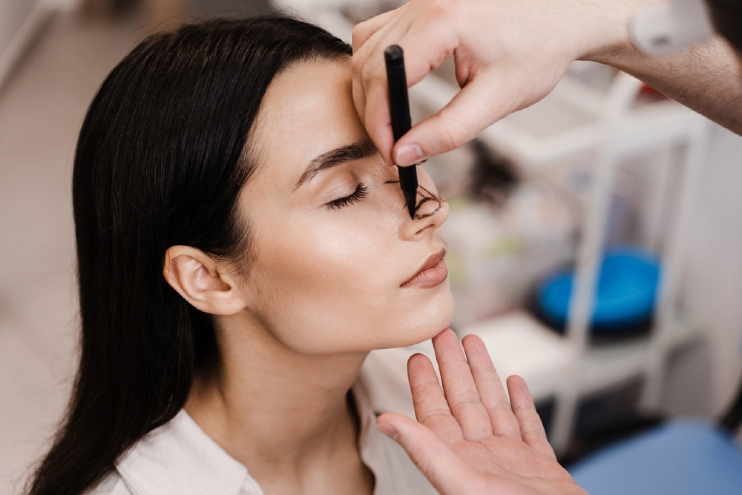
The transition from filler to rhinoplasty isn’t just a physical one — it’s emotional too. Many patients have developed an attachment to their filler-enhanced nose. Letting go of that version can feel risky.
That’s why our consultation process is so detailed. We use 3D imaging, side-by-side comparison photos, and even temporary simulations to show what’s possible with surgery. But most importantly, we listen.
Some patients want to keep a certain angle or profile they liked with filler. Others want a completely fresh start. Either way, we make sure the surgical plan reflects your goals — not someone else’s idea of the “ideal nose.”
And because we operate on a limited-volume basis — only a few cases per day — every patient receives full attention from Dr. Kim and our team.
Healing After Filler-Based Rhinoplasty
Recovery for these cases can be slightly different from a first-time rhinoplasty. The presence of scar tissue or stretched skin may affect swelling patterns and healing speed. In general, we recommend a bit more patience — final results can take 6–12 months to fully settle, especially in revision or reconstruction cases.
But the trade-off is worth it. You’ll no longer have to rely on touch-ups or worry about how your filler is aging. You’ll have a nose that’s yours — in every sense — built on stable, functional foundations.
Why Many Choose Rib Cartilage for Their Final Result
Rib cartilage offers an ideal material for rebuilding a nose that’s seen years of filler. It’s strong enough to hold shape, soft enough to be sculpted, and, most importantly, it’s biocompatible. Unlike synthetic implants, rib cartilage integrates naturally with your tissue, reducing the risk of rejection or shifting over time.
Dr. Kim’s expertise in rib cartilage rhinoplasty — especially in complicated revision cases — is one reason patients from all over the world seek out Kowon. His philosophy is simple: a beautiful nose should never compromise function, and a functional nose should always feel like your own.
Is It Time to Transition? Here’s How to Know

If you’ve been using fillers for years and notice irregularities, discomfort, or simply feel tired of temporary results, it might be time to consider rhinoplasty.
Here are a few signs:
– Your nose looks stiff, shiny, or overprojected
– You’ve had more than 3–4 filler sessions in the same area
– You experience breathing issues or pressure
– You want a more permanent, stable solution
Choosing to move from fillers to surgery isn’t about rejecting the past — it’s about choosing a future with greater harmony, confidence, and ease.
Final Thoughts: Choose a Clinic That Understands the Full Journey
Transitioning from fillers to real rhinoplasty is more than just swapping one method for another. It’s a complex, deeply personal decision that deserves expert care.
At Kowon Plastic Surgery, we’ve guided hundreds of patients through this process. With nearly two decades of experience, Dr. Kim Hyung Taek brings not just surgical skill but a deep understanding of how filler history affects anatomy and outcomes.
Medical Information
Read this article as general guidance.
- This article is provided for general education. It does not replace an in-person examination by a qualified surgeon.
- Results vary between patients. Rhinoplasty can involve bleeding, infection, scarring, asymmetry, breathing changes, graft or implant problems and the possibility of revision surgery.
- Computer simulations and before-and-after photographs cannot guarantee an individual outcome.
- Any prices or timelines mentioned are general. Request an individualised, itemised written quotation and a procedure-specific recovery schedule before paying a deposit or booking travel.
Published by
Kowon Plastic Surgery
A rhinoplasty-focused clinic in Gangnam, Seoul, led by Dr. Kim Hyeongtaek and registered with Medical Korea to treat international patients.
Consultation
Questions about this topic? Ask Dr. Kim directly.
2F, 110 Dosan-daero, Gangnam-gu, Seoul 06038. Send clear photographs, your main concerns and any previous surgery history, and Dr. Kim Hyeongtaek will review what can be assessed before you travel.
International Patient Desk — Gangnam
Kowon Plastic Surgery
Director Dr. Kim Hyeongtaek
Single-surgeon rhinoplasty and autologous cartilage center in Seoul. Delivering meticulous, individual surgical architecture for primary and complex revision procedures.
Practice & Inquiries
Gangnam Clinic
2F, 110 Dosan-daero, Gangnam District, Seoul 06038, South Korea
Consultation Hours (KST)
Mon – Fri: 10:00 – 19:00
Sat: 10:00 – 16:00 · Sun & Holidays Closed
Direct Communication Channels
Telephone: +822-6242-7080WhatsApp: +1-206-809-1367LINE Official: @967xxmreWeChat Consultation Service© 2025 Kowon Plastic Surgery. All rights reserved.
Registered Medical Institution for Foreign Patient Facilitation (Medical Korea). Surgical consultation and procedure terms subject to Korean Ministry of Health and Welfare guidelines.