
Patient Education
Can Cartilage Be Reshaped for a Better Nose Tip?
Can nasal cartilage be reshaped for a better tip? Discover how advanced cartilage techniques — including implant-free tip refinement and rib grafting — create natural, lasting rhinoplasty results at Kowon Plastic Surgery in Seoul.
Article
Published by Kowon Plastic Surgery, Gangnam, Seoul

What You Need to Know About Nasal Tip Refinement, Cartilage Work, and Long-Term Results
You’ve probably seen it a nose that looks overly sharp, pinched at the tip, or oddly rotated. Or maybe you’ve felt it — that nagging sense after a previous rhinoplasty that something about the tip just doesn’t feel… right. If you’ve ever wondered whether the nasal tip can be improved by reshaping the cartilage itself, not just covering it up or adding material — the answer is yes. And at clinics like Kowon Plastic Surgery in Gangnam, this form of precision tip refinement is not only possible — it’s one of the most delicate, artistic parts of what we do.
Let’s explore what it means to reshape cartilage, why it matters, and how modern techniques can deliver a more natural, structurally sound nasal tip — often without implants.
Why the Nose Tip Is So Difficult to Get Right
The nasal tip is often underestimated — even by patients. People tend to focus on the bridge: Is it too high? Too low? Crooked? But when you look closely at what makes a nose truly beautiful and balanced, it’s the tip that does most of the expressive work.
The tip determines:
The angle of your profile
The way your nose transitions into your upper lip
The perceived width or sharpness of your whole nose
Whether your nose looks soft, harsh, natural, or “done”
And here’s the tricky part: the nasal tip is made entirely of cartilage, not bone. And unlike bone, cartilage is flexible, asymmetric, and unique to each individual — like a fingerprint. Getting it right requires surgical experience, anatomical knowledge, and artistic judgment.
Yes, Cartilage Can Be Reshaped — But It Takes Precision
At its core, tip refinement is the process of reshaping and repositioning the cartilage that forms the lower third of the nose. Specifically, this involves the:
Lower lateral cartilages (also called alar cartilages)
Septal cartilage (which may act as a support structure)
Occasionally, additional grafts — often from ear or rib cartilage — to reinforce or recontour
But this is not a matter of just “cutting and suturing.” It’s more like architectural restoration. Dr. Kim Hyung Taek, founder of Kowon Plastic Surgery, often compares the tip of the nose to the peak of a finely balanced roof. If the base or beams are weak, or if the proportions are off by just a few millimeters, the entire structure can tilt, collapse, or create unnatural tension in the surrounding skin.
Through specialized techniques such as:
Cartilage-sparing suture reshaping
Cephalic trim (selective cartilage reduction)
Columellar strut grafting
Rib cartilage refinement and support
…it’s possible to reshape the nose tip without relying on synthetic implants, creating a result that is both aesthetically refined and functionally sound.
The Problem With Quick Fixes: Why Some Nose Tips Collapse Over Time
Patients who come to us for revision surgery often describe the same issues: a tip that was “too high at first, then drooped,” or “sharp and defined right after surgery, but now looks bulbous again.”
What many don’t realize is that quick tip work can lead to long-term problems if the cartilage wasn’t properly supported or reshaped. Common mistakes in poorly performed tip surgeries include:
Over-resection: Removing too much cartilage, weakening the structural integrity
Implant overuse: Using synthetic material to prop up the tip instead of building a stable framework
Lack of individualization: Applying the same surgical approach regardless of the patient’s anatomy or skin thickness
Ignoring function: Narrowing the nostrils so much that breathing becomes compromised
At Kowon, we often say: “Beautiful noses don’t just look natural — they work naturally, too.” That’s why we prioritize long-term tip stability, breathing function, and tissue compatibility in every surgical plan.
Rib Cartilage: The Gold Standard for Revision Tip Surgery

If you’ve had prior rhinoplasty and are experiencing issues with your tip — such as asymmetry, collapse, or extrusion from previous implants — the most reliable solution often involves rib cartilage grafting.
Why rib?
It’s strong and stable, ideal for rebuilding lost support
It’s your own tissue, so there’s no risk of rejection
It can be sculpted precisely to reinforce or reshape the tip framework
Dr. Kim has performed over 10,000 successful procedures and is globally recognized for his work in implant-free, rib cartilage rhinoplasty. At Kowon, we don’t just use rib cartilage as filler — we reshape it, integrating it into a customized architecture that supports both beauty and breathing.
This is especially important in revision cases where previous surgeries may have damaged or removed key parts of the nasal cartilage. Restoring the tip in these situations isn’t about “adding more” — it’s about rebuilding what was lost, piece by piece, with surgical foresight.
Can a Tip Be Refined Without Changing the Whole Nose?
Absolutely. Many patients come to us happy with their nasal bridge or overall shape, but dissatisfied with just the tip. Common concerns include:
Bulbous tip
Drooping tip (especially when smiling)
Pinched or asymmetric tip
Visible implant edges or irregularities
Tip-only rhinoplasty is possible — and often preferable — when the issue is isolated. But it still demands the same care and precision as a full surgery. The tip must harmonize with the rest of the nose, and even a small adjustment can affect nasal function or proportions.
At Kowon, we never “rush” tip work. Our process includes:
3D analysis and surgical mapping
Assessment of nasal skin thickness, cartilage strength, and existing structure
A function-preserving approach — especially important in tip support and airflow
Real Talk: What to Expect From Cartilage Reshaping
Cartilage reshaping is a powerful tool — but it’s not magic. Here are a few things every patient should understand:
Healing takes time. Swelling in the nasal tip can last longer than in the bridge — sometimes several months before the final shape emerges.
Scar tissue matters. In revision cases, existing scar tissue must be carefully managed to avoid distortion or poor healing.
Natural means nuanced. A refined, natural-looking tip isn’t ultra-sharp or over-rotated. It’s softly defined, balanced, and proportionate to your face.
Less is often more. Strategic reshaping and support often yield better outcomes than aggressive removal or excessive augmentation.
Is Cartilage Reshaping Right for You?
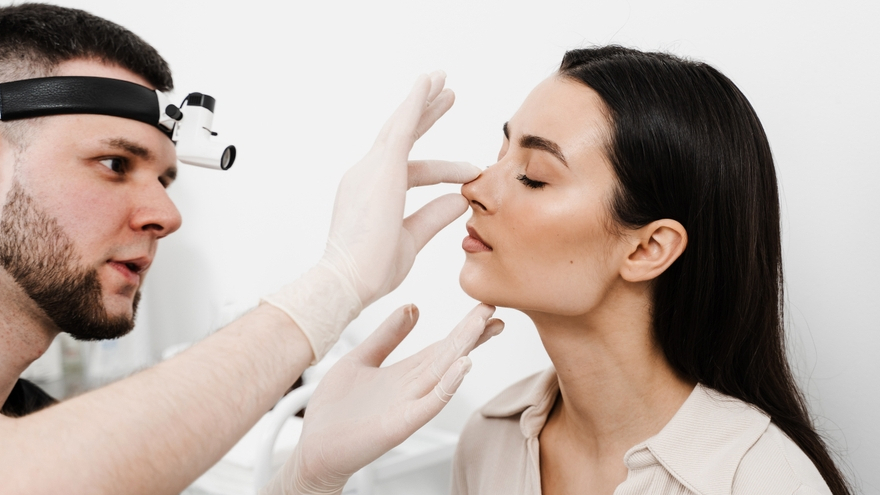
If you’re unhappy with the shape, projection, or feel of your nasal tip — especially after a previous surgery — cartilage reshaping might be the key to a more satisfying result.
Look for a clinic that offers:
Individualized planning — no one-size-fits-all noses
Experience with revision and rib cartilage
Surgeon-led care (not outsourced to junior staff)
A focus on both aesthetics and function
That’s the philosophy we live by at Kowon Plastic Surgery.
Final Takeaway
Can cartilage be reshaped for a better nose tip? Yes — and when done correctly, it’s one of the most transformative parts of modern rhinoplasty.
But not all cartilage reshaping is equal. For long-lasting results that respect your anatomy, preserve breathing, and achieve a natural balance, choose a surgeon with the skill to work with your tissue, not just around it.
At Kowon Plastic Surgery in Gangnam, we specialize in implant-free, cartilage-based nasal refinement. Whether you’re seeking a first-time tip correction or revision after past complications, we offer high-safety, deeply personalized care backed by over 19 years of experience.
Not sure if your nasal tip needs correction?
Book a consultation with Dr. Kim at Kowon — and discover what precise, natural refinement really looks like.
Medical Information
Read this article as general guidance.
- This article is provided for general education. It does not replace an in-person examination by a qualified surgeon.
- Results vary between patients. Rhinoplasty can involve bleeding, infection, scarring, asymmetry, breathing changes, graft or implant problems and the possibility of revision surgery.
- Computer simulations and before-and-after photographs cannot guarantee an individual outcome.
- Any prices or timelines mentioned are general. Request an individualised, itemised written quotation and a procedure-specific recovery schedule before paying a deposit or booking travel.
Published by
Kowon Plastic Surgery
A rhinoplasty-focused clinic in Gangnam, Seoul, led by Dr. Kim Hyeongtaek and registered with Medical Korea to treat international patients.
Consultation
Questions about this topic? Ask Dr. Kim directly.
2F, 110 Dosan-daero, Gangnam-gu, Seoul 06038. Send clear photographs, your main concerns and any previous surgery history, and Dr. Kim Hyeongtaek will review what can be assessed before you travel.
International Patient Desk — Gangnam
Kowon Plastic Surgery
Director Dr. Kim Hyeongtaek
Single-surgeon rhinoplasty and autologous cartilage center in Seoul. Delivering meticulous, individual surgical architecture for primary and complex revision procedures.
Practice & Inquiries
Gangnam Clinic
2F, 110 Dosan-daero, Gangnam District, Seoul 06038, South Korea
Consultation Hours (KST)
Mon – Fri: 10:00 – 19:00
Sat: 10:00 – 16:00 · Sun & Holidays Closed
Direct Communication Channels
Telephone: +822-6242-7080WhatsApp: +1-206-809-1367LINE Official: @967xxmreWeChat Consultation Service© 2025 Kowon Plastic Surgery. All rights reserved.
Registered Medical Institution for Foreign Patient Facilitation (Medical Korea). Surgical consultation and procedure terms subject to Korean Ministry of Health and Welfare guidelines.