
Patient Education
Can a Nose Job Fix a Droopy Tip?
Can rhinoplasty fix a droopy nose tip? Discover how expert techniques like implant-free rib cartilage grafting can lift and support the tip for natural, lasting results — from the specialists at Kowon Plastic Surgery in Seoul.
Article
Published by Kowon Plastic Surgery, Gangnam, Seoul
-d7f32218-8ac2-4fb1-a1c1-a134619397c0.jpg)
Understanding the Art and Precision Behind Elevating the Nasal Tip
If your nose tip droops when you smile or sags even at rest, you're not imagining it — and yes, a nose job can fix it. But not just any nose job.
At Kowon Plastic Surgery, we see this concern almost daily. Patients come in feeling frustrated — not just by the appearance of a downward-turning tip, but by how it makes their entire face look tired, sad, or aged. For many, it’s not about wanting a smaller nose, but simply a more balanced and lifted nasal contour that feels right for their features.
So let’s break it down: What causes a droopy nasal tip, and how can rhinoplasty — especially the highly specialized, implant-free kind we perform at Kowon — provide a lasting, natural-looking correction?
What Is a Droopy Nasal Tip?
A "droopy tip" refers to a nasal tip that points downward, either at rest or more noticeably when smiling. It can be subtle or pronounced, and in many cases, it draws unwanted attention by disrupting facial harmony.
Causes of a Droopy Tip:
Weak tip cartilage support — The lower lateral cartilages that shape the nose tip may lack strength or structure.
Overactive depressor septi nasi muscle — This muscle pulls the nose tip downward when smiling.
Aging — Cartilage weakens, and soft tissue loses elasticity over time, causing the tip to descend.
Previous rhinoplasty complications — Scar tissue, misplaced implants, or poor technique can lead to a sagging or overly downward-rotated tip.
Ethnic and genetic traits — Some patients naturally have a lower-hanging columella or downward tip orientation due to bone and cartilage structure.
Can Rhinoplasty Correct It?
Absolutely — but how it's corrected makes all the difference.
Many first-time rhinoplasty patients think lifting the tip is as simple as “cutting and rotating.” The reality? Tip rotation and support involve some of the most complex and delicate techniques in rhinoplasty. Especially if you're looking for:
Natural movement when smiling
Long-term stability (no “drooping back down” over time)
Preservation of airflow and breathing
At Kowon Plastic Surgery, our philosophy is clear: function and form must work together. A lifted nose that’s too stiff, narrow, or artificial-looking may check the cosmetic box — but at the cost of comfort, personality, or even breathing.
How Does Dr. Kim Hyung Taek Approach a Droopy Tip?
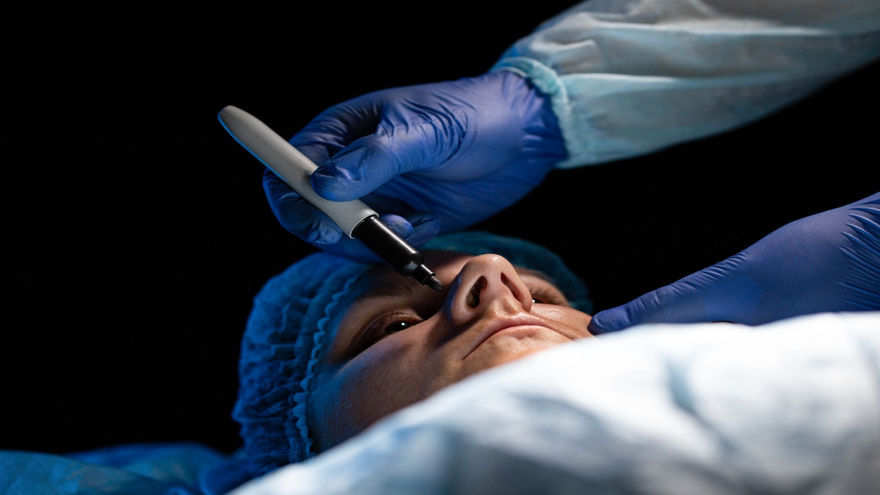
Dr. Kim, head of Kowon Plastic Surgery and the Rib Cartilage Rhinoplasty Center at O&Young, is known for his implant-free, structural approach to nasal refinement. With over 10,000 procedures behind him, he understands that fixing a droopy tip isn't just about lifting — it's about rebuilding support from the inside out.
Key Surgical Techniques We Use:
1. Tip Support Reconstruction
When the existing tip lacks support, especially due to aging or poor cartilage structure, Dr. Kim often builds a stronger framework using the patient’s own rib cartilage. This autologous tissue integrates naturally with existing anatomy and resists long-term sagging better than synthetic implants or soft septal cartilage.
“Think of the nose like a tent. If the pole in the center is weak, the entire structure sags. Strengthen the pole, and everything lifts — naturally and stably.” — Dr. Kim
2. Columellar Strut or Septal Extension Graft
These structural grafts act like scaffolding between the nostrils or along the septum. They allow for precise control over tip rotation (how high the tip sits) and projection (how far the tip extends forward). Rib cartilage gives us the power to shape and support even in difficult revision cases.
3. Depressor Septi Nasi Muscle Modification
For patients whose tip droops more when they smile, Dr. Kim may selectively release or modify the muscle that pulls the tip downward. This gives the nose a lighter, more elevated look without restricting natural expression.
4. Shield or Cap Grafting for Tip Definition
In cases where the nose is not only droopy but bulbous or undefined, shield grafts can add contour and refinement to the tip while ensuring upward rotation holds its shape long-term.
Why Implant-Free Methods Matter
Many droopy tips are the result of previous surgeries where implants were used to push or rotate the tip unnaturally. Over time, these implants can shift, harden, or thin the skin — leading to worse drooping or visible deformities.
Kowon Plastic Surgery specializes in implant-free rhinoplasty, especially using rib cartilage, which provides the strength, biocompatibility, and shape memory needed to lift and support the tip — without long-term risks.
What Results Can You Expect?
-8571c673-398a-4ebd-ae62-bff9559e8a05.jpg)
Before:
Tip hangs downward at rest
Nose appears long or heavy
Tip disappears when smiling
Nasal base may look wide or undefined
After:
Tip gently rotated upward and supported
Better facial balance and harmony
Natural-looking movement when smiling
Structural integrity for decades
Our goal is not a “Westernized” nose or a copy-paste beauty ideal — it’s a personalized, anatomical correction that matches your face, ethnicity, and preferences.
Real-World Insight: Why Patients Seek This Surgery
We’ve had patients — especially professionals, actors, and those in public-facing roles — come in feeling that their nose makes them look tired, severe, or aged beyond their years. Many are hesitant because they fear looking “done” or losing their identity.
What we emphasize is this: a well-executed rhinoplasty doesn't change who you are — it reveals balance and symmetry that was always meant to be there.
Is a Droopy Tip a Medical Problem?
Sometimes, yes.
If the droopy tip is caused by internal collapse (like weak or falling alar cartilages), it can contribute to airway obstruction, especially when breathing deeply or lying down. In these cases, a structural revision not only improves appearance but restores nasal function, too.
At Kowon, we always evaluate both form and function. Our philosophy is: you should never have to choose between beauty and breathing.
Final Takeaway: Should You Consider Surgery?
If your nasal tip droops — whether due to aging, genetics, or a previous surgery — and it affects how you look, feel, or breathe, rhinoplasty may be the right solution. But tip rotation and support is a precision task that requires deep anatomical knowledge, artistry, and a long-view understanding of how the nose ages and adapts over time.
"It’s not about just rotating the tip — it’s about creating a new foundation that holds that rotation for life."
That’s why Kowon Plastic Surgery is trusted for complex nasal cases, revision rhinoplasty, and implant-free structural work using rib cartilage.
Thinking About Fixing a Droopy Tip?
Here’s what you can do:
Document your concerns — Photos (especially smiling vs resting) help identify dynamic drooping.
Consult with a specialist — Choose a surgeon with experience in both cosmetic and functional rhinoplasty.
Ask about implant-free options — Especially if you’ve had surgery before or are concerned about long-term stability.
📍Located in Gangnam, Seoul, Kowon Plastic Surgery offers deeply individualized care under the leadership of Dr. Kim Hyung Taek. Whether you're seeking primary tip correction or a complex revision, we invite you to experience rhinoplasty that is safe, structured, and truly bespoke.
Still unsure if your tip needs correction?
Schedule a consultation at Kowon Plastic Surgery — where precision meets artistry, and every nose gets the time and care it truly deserves.
Medical Information
Read this article as general guidance.
- This article is provided for general education. It does not replace an in-person examination by a qualified surgeon.
- Results vary between patients. Rhinoplasty can involve bleeding, infection, scarring, asymmetry, breathing changes, graft or implant problems and the possibility of revision surgery.
- Computer simulations and before-and-after photographs cannot guarantee an individual outcome.
- Any prices or timelines mentioned are general. Request an individualised, itemised written quotation and a procedure-specific recovery schedule before paying a deposit or booking travel.
Published by
Kowon Plastic Surgery
A rhinoplasty-focused clinic in Gangnam, Seoul, led by Dr. Kim Hyeongtaek and registered with Medical Korea to treat international patients.
Consultation
Questions about this topic? Ask Dr. Kim directly.
2F, 110 Dosan-daero, Gangnam-gu, Seoul 06038. Send clear photographs, your main concerns and any previous surgery history, and Dr. Kim Hyeongtaek will review what can be assessed before you travel.
International Patient Desk — Gangnam
Kowon Plastic Surgery
Director Dr. Kim Hyeongtaek
Single-surgeon rhinoplasty and autologous cartilage center in Seoul. Delivering meticulous, individual surgical architecture for primary and complex revision procedures.
Practice & Inquiries
Gangnam Clinic
2F, 110 Dosan-daero, Gangnam District, Seoul 06038, South Korea
Consultation Hours (KST)
Mon – Fri: 10:00 – 19:00
Sat: 10:00 – 16:00 · Sun & Holidays Closed
Direct Communication Channels
Telephone: +822-6242-7080WhatsApp: +1-206-809-1367LINE Official: @967xxmreWeChat Consultation Service© 2025 Kowon Plastic Surgery. All rights reserved.
Registered Medical Institution for Foreign Patient Facilitation (Medical Korea). Surgical consultation and procedure terms subject to Korean Ministry of Health and Welfare guidelines.